sandwich panel line
The core working logic of a PU sandwich panel line starts with the synchronized feeding of two surface materials, which are conveyed steadily into the production platform under precise speed control. Before the foaming stage, surface substrates go through simple cleaning and pre-treatment to remove dust and uneven burrs, ensuring the polyurethane foam can bond tightly with both upper and lower layers without peeling or hollowing. The raw polyol and isocyanate materials are delivered to the mixing head through independent pipelines, where they are fully blended at a preset ratio before being evenly poured onto the lower sheet. The pouring volume and mixing speed are adjustable according to the target insulation thickness and heating layout requirements of ceiling panels, so that the foam core can form a uniform cellular structure after expansion and curing. All feeding and metering actions run in coordination, avoiding local over-foaming or insufficient filling that would weaken the overall performance of finished panels used for heating insulation ceilings.
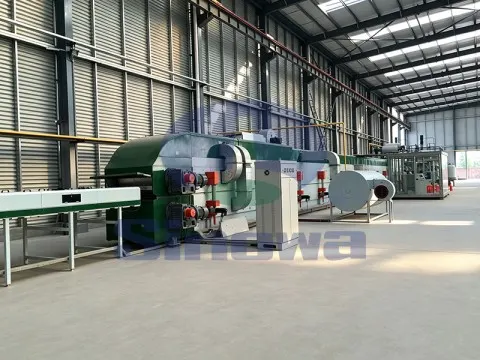
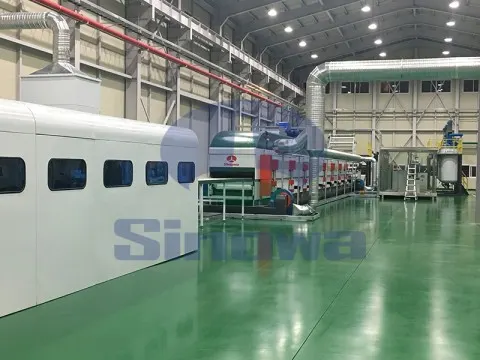
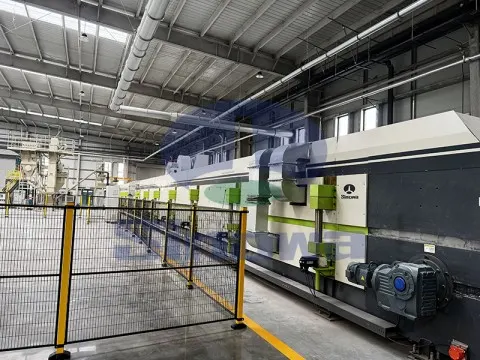
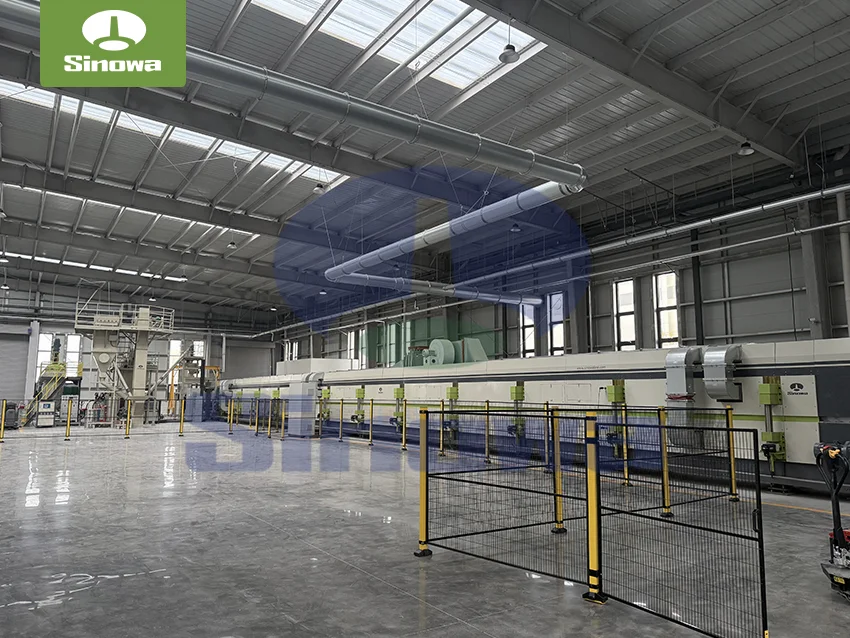
Continuous double-belt pressing is an indispensable section for shaping qualified PU ceiling panels with heating insulation features. After the liquid PU mixture is distributed, the upper cover sheet is closed over the foam layer, and the whole composite structure enters the long curing channel clamped between two circulating steel belts. Constant pressure and stable temperature inside the channel guide the foam to expand evenly in the limited space, locking the preset thickness of the sandwich core. This pressing method effectively flattens the panel surface and eliminates internal gaps, which is critical for ceiling heating applications because consistent core density guarantees uniform thermal resistance across the whole panel. If pressure fluctuates during this phase, some areas of the foam core will become looser, leading to uneven heat dissipation when the heating system works and shortening the service life of the ceiling assembly. Operators can adjust the clearance between the belts and the residence time in the curing zone to match different panel specifications for ceiling installation.
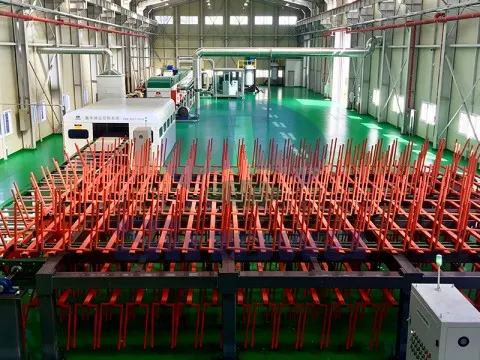
Embedded heating layout coordination is a unique design consideration for this type of PU sandwich panel line, different from ordinary insulation panel production equipment. When manufacturing ceiling panels that combine heating and insulation, auxiliary positioning structures on the production line help arrange heating components in fixed positions between the surface sheet and PU foam core before foaming is completed. The liquid polyurethane foam wraps around the heating elements during expansion, forming a seamless composite body after curing. This integrated molding approach avoids the trouble of pasting heating layers separately after panel production, and reduces thermal contact resistance between the heating part and the insulation core. The line keeps the foaming process gentle enough to prevent excessive expansion force from shifting or damaging the embedded heating structures, while maintaining good adhesion between the foam, heating parts and surface skins. Proper coordination in this step ensures heat generated by the embedded components transfers inward to the room and reduces outward heat loss through the ceiling.
Curing and temperature holding control directly determine the long-term stability of PU sandwich ceiling panels for heating insulation use. After leaving the pressing section, semi-finished panels still need a period of slow curing to complete the chemical reaction of polyurethane foam. The production line maintains mild and stable ambient conditions in this area, preventing rapid temperature changes that may cause internal stress inside the foam core. Residual chemical reactions finish gradually, and the cellular structure becomes rigid and dimensionally stable. Panels that are not fully cured are prone to slight deformation after being installed on ceilings, which will create gaps between adjacent panels and undermine the overall insulation and heating effect. Well-controlled curing also helps maintain stable thermal conductivity of the PU core over years of use, so the ceiling can keep its expected energy-saving performance even with repeated cycles of heating and cooling indoors.
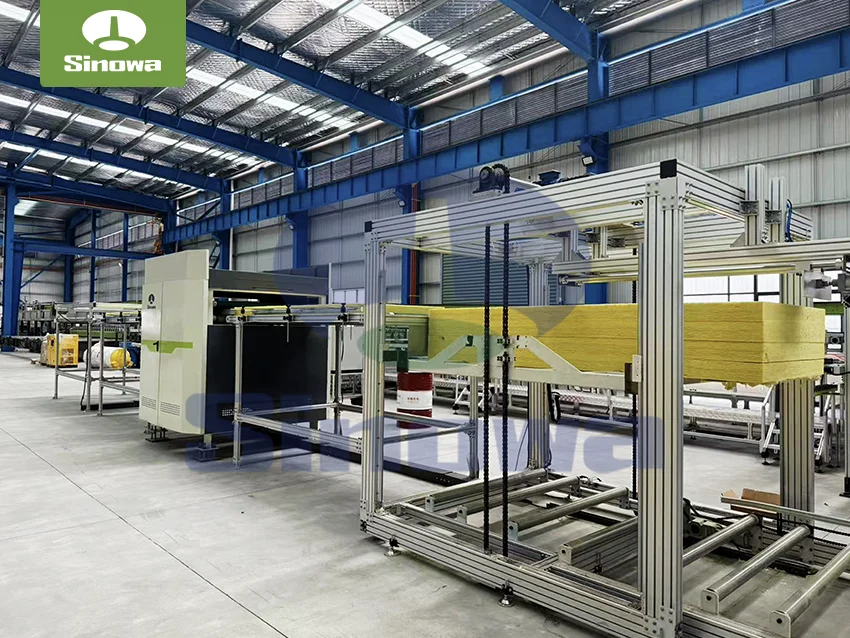
Online trimming, cutting and edge finishing modules process continuous long panels into standard sizes suitable for ceiling installation. The continuous slab coming out of the curing section moves at a matched speed to the cutting station, where flying saws perform precise cross-cutting without stopping the main production line. Side trimming devices remove irregular edges on both sides to ensure consistent panel width, and edge sealing mechanisms can apply supplementary PU material along cut edges to seal exposed foam cells. Edge sealing is especially valuable for heating insulation ceiling panels, as open foam edges easily absorb moisture in humid indoor environments. Moisture accumulation inside the foam core will increase thermal conductivity and reduce insulation capacity, and may also trigger premature aging of the embedded heating parts. Smooth, sealed edges also make panels easier to splice neatly during ceiling construction, reducing thermal leakage at assembly joints.
Automatic inspection and quality monitoring functions run through the whole PU sandwich panel line to screen out unqualified ceiling heating insulation products. Multiple sensing units track key parameters including feeding speed, PU material mixing ratio, foaming pressure, curing temperature and finished panel thickness in real time. When data deviates from the set range, the system sends prompts and marks the corresponding section of the panel for subsequent inspection. Manual sampling checks supplement automatic detection, focusing on bonding strength between skins and foam, uniformity of the foam cell structure, and integrity of embedded heating components. Panels with poor bonding, uneven core density or damaged heating structures are separated and will not flow into packaging. Stable quality monitoring reduces the risk of performance failure after ceiling installation, and helps maintain consistent output quality for large-scale ceiling renovation and new construction projects.
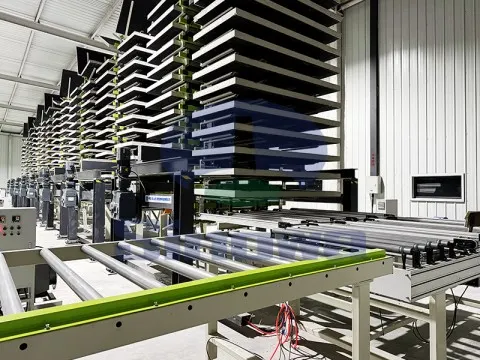
Finished panel handling and packaging systems protect PU ceiling panels with heating insulation functions during transit and storage. After cutting and inspection, finished panels are conveyed to stacking stations, where soft separating films are placed between each panel surface to avoid scratches on the outer skins. Stacking height is controlled properly to prevent excessive pressure from crushing the foam core or squeezing internal heating components. Bundling and wrapping operations use breathable protective materials that do not trap condensed moisture around the panels. Improper storage and transportation can cause permanent deformation of the PU core or breakage of the embedded heating parts, which would render the ceiling unable to deliver the designed heating and insulation effect. Well-organized packaging also simplifies loading and unloading, and keeps panels clean and intact until they arrive at the construction site for ceiling assembly.
The application flexibility of the PU sandwich panel line supports diverse ceiling design requirements for heating and insulation scenarios. By adjusting formula parameters, production speed and embedded component layout, the same line can produce panels with different insulation capacities and heating distribution forms, fitting low-height indoor ceilings, large open-space ceilings and other indoor environments. Panels made on this line combine decoration, heating function and thermal insulation in one component, simplifying the traditional ceiling construction process that requires separate insulation layers, heating layers and decorative boards. Compared with multi-layer assembled ceiling systems, integrated PU sandwich ceiling panels cut down on on-site construction steps and lower the chance of human error during installation. As more indoor spaces pursue comfortable radiant heating and energy-efficient thermal management, this production solution continues to gain wider recognition for ceiling system manufacturing.
Ongoing optimization of PU sandwich panel lines focuses on improving material utilization and operational efficiency while preserving the heating insulation performance of ceiling panels. Updated control systems reduce waste of polyurethane raw materials by refining metering and pouring accuracy, and optimized conveying structures lower the frequency of shutdowns caused by material jamming. Improvements also target gentler handling of embedded heating accessories to raise the yield rate of integrated panels. As the demand for low-energy indoor heating solutions grows, these production lines keep evolving to support more reliable, high-performance ceiling products. The integration of automated processes and adjustable production parameters makes the equipment a practical foundation for modern ceiling systems that merge comfortable heating and effective thermal insulation.
Sinowa is a professional manufacturer of sandwich panel machine in china, we provide diversified and high-performance sandwich panel production lines, including fully automatic continuous PU sandwich panel line and customized special lines to meet mass production and personalized order demands. These sandwich panel lines support processing multiple foam core materials, such as PU, PIR, mineral wool, rock wool and glass wool, covering different insulation and fireproof standards.
Featuring stable operation, high efficiency, energy saving and easy maintenance, our PU sandwich panel line deliver sandwich panels with excellent thermal insulation, fire resistance, sound insulation and lightweight durability. The finished panels are widely applied in industrial workshops, warehouse roofing and wall cladding, cold storage insulation, serving global construction and industrial insulation markets.
https://www.cnsinowa.com/sandwich-panel-machines/pu-sandwich-panel-line-for-ceiling-heating-insulation.html