Service Life Of Phenolic Board Production Line Accessories
Sep 22, 2026
The service life of phenolic board production line accessories is a core factor affecting production stability and operational efficiency.
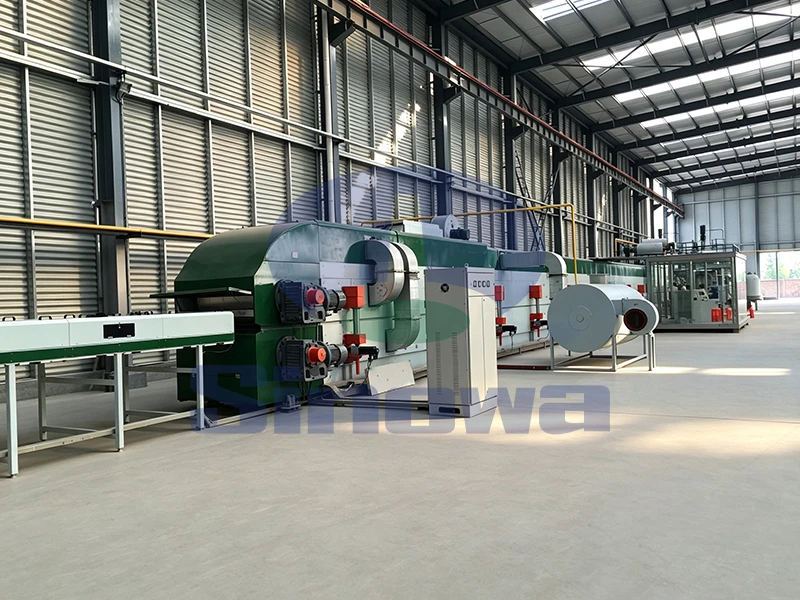
Phenolic board production involves continuous high-temperature pressing, material friction, mechanical vibration, and chemical corrosion, all of which impose severe operating loads on production line accessories. Unlike ordinary industrial equipment parts, these accessories work in a harsh composite environment throughout the production process, making their service life highly dependent on working conditions. Long-term high-temperature exposure will gradually accelerate the aging of rubber, plastic and sealing accessories, causing material hardening, cracking and elasticity loss. Meanwhile, the frequent friction between raw materials and transmission, cutting and molding accessories leads to continuous surface wear, which subtly changes the structural precision of parts. In addition, the trace chemical components released from phenolic resin during hot pressing will produce slow corrosive effects on metal accessories, triggering surface oxidation and micro-corrosion pits. These cumulative damages do not cause sudden equipment failure in the early stage, but will continuously reduce the operating accuracy and stability of accessories, gradually shortening their effective service cycle. Even accessories of the same type will show obvious service life differences when applied to production lines with different operating intensities, working environments and production rhythms, which fully reflects the strong correlation between operating conditions and accessory durability.
Daily operation and maintenance management is the most direct and effective way to prolong the service life of phenolic board production line accessories. Scientific and standardized maintenance can avoid most premature wear and failure caused by human factors and irregular operation. First of all, regular surface cleaning is essential. Residual phenolic powder, resin scraps and dust attached to accessory surfaces will form hard deposits after long-term high-temperature baking, increasing operational friction and local stress concentration. Timely cleaning can eliminate such hidden dangers and maintain the original operating state of accessories. Secondly, reasonable lubrication maintenance for transmission and rotating accessories cannot be ignored. Long-term high-load operation will consume lubricating oil and grease, and insufficient lubrication will lead to dry friction between parts, resulting in rapid wear and temperature rise. It is necessary to regularly check the lubrication state, replace deteriorated lubricants, and ensure a stable lubricating film between matching parts. In addition, regular operation inspection and fastening treatment are required. Mechanical vibration in continuous production will loosen connecting bolts and fixed parts of accessories, causing offset operation and abnormal abrasion. Regular inspection, correction and fastening can ensure the stable installation position of accessories and avoid abnormal wear caused by displacement. Standardized daily maintenance can effectively slow down the aging and wear rate of accessories and maximize their normal service cycle.
Different types of phenolic board production line accessories present distinct wear rules and service life characteristics due to different material properties and functional roles. Wear parts in direct contact with raw materials, such as cutting blades, conveying guide parts and molding contact accessories, belong to high-consumption components with relatively short service life. These accessories bear frequent physical friction and impact in every production cycle, and their surface precision will gradually decline with the increase of production times, until they cannot meet the processing requirements of phenolic boards. High-temperature resistant accessories used in hot pressing links, including heat insulation gaskets and sealing parts, are mainly aged by thermal stress. Long-term alternating high temperature and cooling will lead to material fatigue, structural loosening and performance degradation, and their service life is mainly affected by the cumulative time of high-temperature operation. Transmission accessories such as gears, bearings and conveyor rollers are mainly worn by mechanical operation fatigue. Their failure process is relatively slow, but long-term repeated load operation will cause metal fatigue, surface peeling and rotational jitter, affecting the overall operation stability of the production line. Understanding the differentiated wear characteristics of various accessories helps to formulate targeted use and maintenance schemes and realize refined life management.
Improper operation and abnormal working conditions are the main human and environmental factors leading to the shortened service life of phenolic board production line accessories. Irregular operating behaviors in daily production often cause invisible damage to accessories. For example, excessive feeding load beyond the equipment design range will increase the operating pressure of transmission and bearing accessories, resulting in accelerated fatigue wear; uneven placement of raw materials will cause eccentric operation of processing accessories, producing abnormal impact and friction. In addition, sudden start-stop and frequent speed regulation of the production line will generate instantaneous impact force on various accessories, destroying the stable matching state between parts and causing local stress damage. Abnormal environmental factors also have a significant impact on accessory life. Excessively high workshop ambient temperature will aggravate the thermal aging of non-metal accessories, while excessive humidity will accelerate the oxidation and rust of metal accessories. Long-term accumulation of these improper operations and abnormal conditions will greatly reduce the theoretical service life of accessories, increase the frequency of accessory replacement, and further improve the overall production cost of the enterprise.
Material performance optimization and scientific equipment operation optimization are effective advanced means to further extend the service life of phenolic board production line accessories. On the premise of meeting production process requirements, selecting accessories with excellent wear resistance, high temperature resistance and corrosion resistance can fundamentally improve the durability of parts. For key high-consumption accessories, upgrading to optimized material versions can significantly reduce daily wear and aging speed and prolong the effective service cycle. In terms of equipment operation optimization, formulating reasonable production operation plans and avoiding long-term continuous high-load operation can effectively reduce the fatigue loss of accessories. Reasonably arranging production intervals to carry out equipment cooling and accessory inspection can alleviate thermal fatigue and mechanical stress accumulation of parts. In addition, optimizing the feeding mode and production process parameters to reduce abnormal friction, impact and corrosion in the production process can create a more stable operating environment for accessories. The combination of material upgrading and operation optimization can break through the service life limit of traditional accessories, reduce the overall replacement frequency of production line parts, and improve the economic benefit and operational stability of phenolic board production.
https://www.cnsinowa.com/faqs/service-life-of-phenolic-board-production-line-accessories.html
Main Products
-

Continuous PU Sandwich Panel Production Line
This continuous PU sandwich panel production line is an integrated automatic equipment. It covers uncoiling, forming, foaming, curing and cutting processes. With automatic raw material proportioning and precise temperature & pressure control, PIR sandwich panel production line continuously composites panels with double skins. Polyurethane sandwich panel production line stably produces steel and aluminum sandwich panels. Featuring high automation, the line makes fireproof and thermal-insulation panels for building enclosure and cold storage. -

Rock Wool Sandwich Panel Production Line
Continuous rockwool sandwich panel production line is an automatic integrated production equipment, consisting of uncoiling, forming, gluing and compounding, heating curing, fixed-length cutting, automatic stacking and other modules. The mineral wool sandwich panel production line continuously conveys color steel plates and rock wool core materials to automatically complete lamination and curing, which can produce fireproof and thermal insulation sandwich panels. Featuring high automation degree and stable operation, this production line is suitable for mass production of panels used for building walls, roofs and other scenarios. -

Phenolic Insulation Board Production Line
This integrated automatic production line continuously manufactures PU and phenolic insulation boards. The insulation board production line covers raw material proportioning, high-pressure foaming, laminating, curing and fixed-length cutting. Featuring high automation and stable molding, the insulation panel production line supports various surface materials. PU boards offer excellent thermal insulation, while phenolic boards have superior fire resistance. These products are widely used in construction, cold chain, ventilation ducts and other thermal insulation fields.