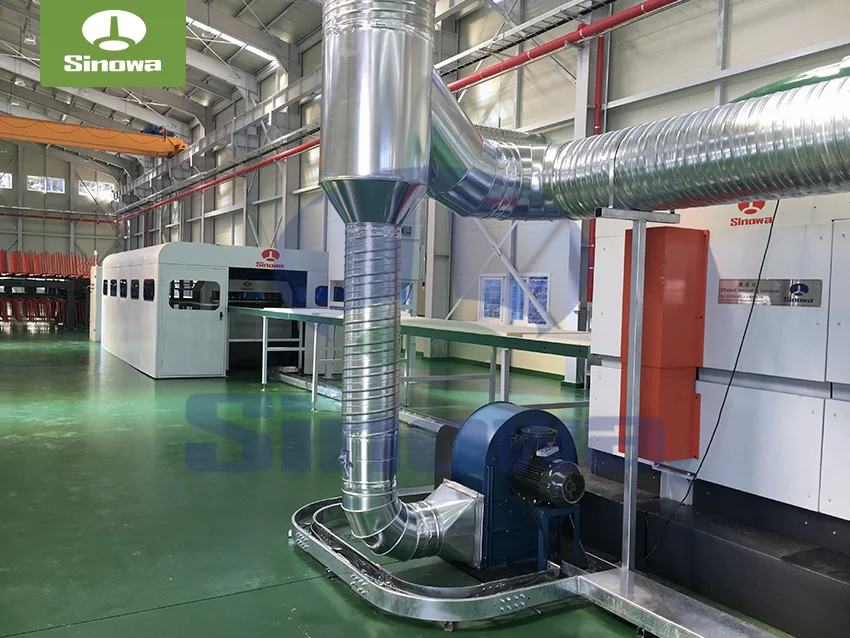
 sandwich panel line
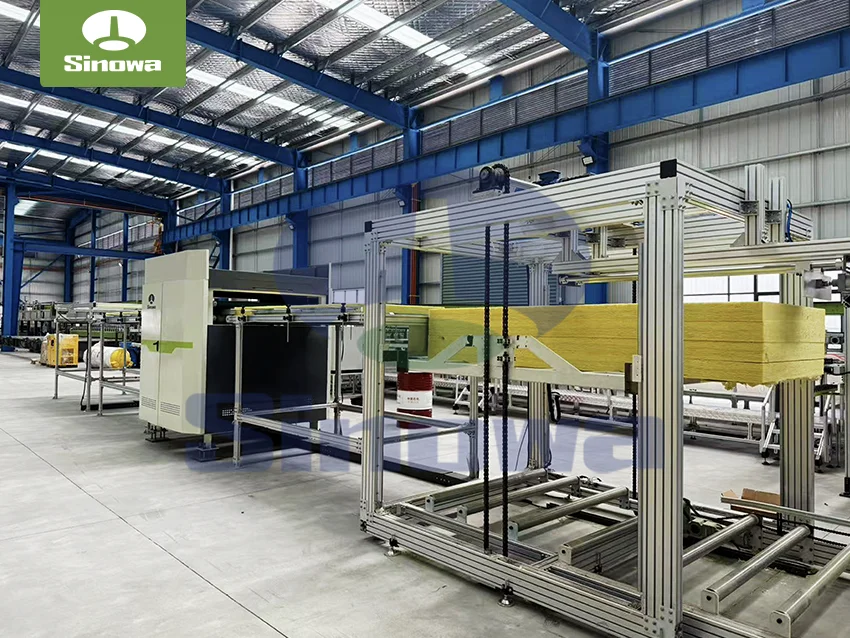
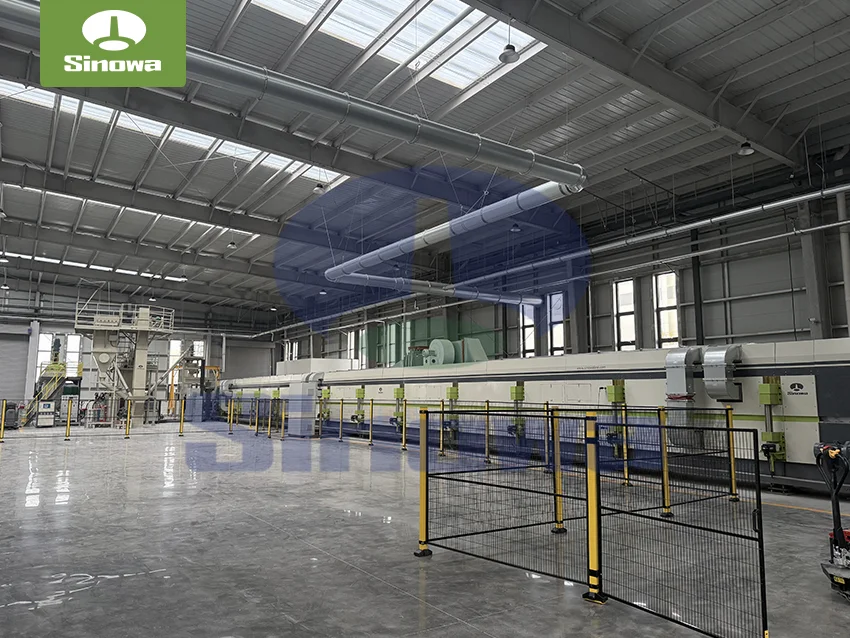
The overall composition of a phenolic composite sandwich panel production line follows a modular and collaborative design concept, with each functional module closely connected and precisely coordinated to form a closed-loop production system covering the entire manufacturing process. The core functional units of the production line include raw material pretreatment and automatic feeding systems, phenolic resin mixing and foaming injection systems, continuous laminating and composite molding systems, segmented temperature-controlled curing and cooling systems, fixed-size cutting and trimming systems, as well as final finished product conveying and stacking systems. Every module is designed with targeted process logic and operational precision, and the linkage operation between modules eliminates intermittent production gaps, reduces manual operation errors, and lays a solid foundation for the consistent quality of phenolic composite sandwich panels in mass production.
Raw material pretreatment and automatic feeding serve as the starting link of the entire production process, determining the basic uniformity and bonding performance of subsequent composite molding. The main raw materials involved in production include liquid phenolic resin, functional auxiliary additives, and continuous coiled surface base materials. Before formal production, the phenolic resin raw material needs to undergo constant-temperature stirring and impurity filtration treatment to eliminate tiny particulate impurities and uneven resin viscosity stratification generated during raw material storage and transportation. This pretreatment process ensures that the resin maintains a stable fluid state and uniform molecular activity throughout the foaming and bonding process, avoiding local structural defects such as inconsistent foaming density and insufficient interfacial bonding in the finished panel core. Functional additives used in the production process are proportioned and automatically metered according to fixed process ratios, which can adjust the foaming multiplying power, curing speed, and structural compactness of the phenolic foam core, optimizing the overall mechanical and fire-resistant performance of the composite panel.
The surface base material feeding system adopts an automatic unwinding and deviation correction structure, which can realize continuous and stable output of coiled base materials. In the actual production process, the system can automatically fine-tune the lateral position of the base material according to real-time operating parameters, effectively solving the problem of material deviation caused by uneven coil tension or mechanical vibration during high-speed operation. This precise feeding control ensures that the upper and lower surface materials can maintain complete parallelism and consistent tension in the subsequent composite process, preventing defects such as panel surface wrinkling, offset composite layers, and uneven edge thickness, which are common in traditional manual feeding production. The entire feeding process operates in a fully automated closed state, reducing material waste caused by human operation and improving the overall utilization rate of raw materials.
The phenolic resin mixing and foaming injection system is the core functional unit that shapes the internal core structure of the sandwich panel and determines the key performance of the finished product. Different from ordinary foam composite processes, the foaming process of phenolic composite materials requires strict control of mixing uniformity, injection flow rate, and initial foaming environment. The phenolic insulation board production line adopts a dynamic high-speed mixing structure to fully blend the pretreated phenolic resin with various functional auxiliaries in a sealed mixing cavity. The fully mixed slurry is transported to the continuous injection device through a constant-pressure conveying pipeline, and evenly injected between the upper and lower surface base materials in a linear and quantitative manner. The precise control of injection volume and distribution ensures that the phenolic foam slurry can fully spread and foam uniformly in the closed composite space, forming a high-density closed-cell structure inside the panel core. The closed-cell structure formed by controlled foaming gives the phenolic sandwich panel excellent thermal insulation performance and structural stability, while effectively avoiding water absorption and moisture penetration that may occur in open-cell structures, enhancing the material’s adaptability to humid and variable temperature working environments.
Continuous laminating and composite molding is the key process to realize the integration of surface material and phenolic foam core. The phenolic panel production line is equipped with a long-span double-track laminating device, which provides a stable closed molding space for the composite panel. After the phenolic foam slurry is injected, the upper and lower surface materials and the intermediate foam slurry enter the laminating system synchronously. The system adopts a gradient pressure control mode, with the pressure gradually increased from the initial feeding section to the middle molding section, ensuring that the foam slurry can fully infiltrate the contact surface of the base material without causing excessive extrusion and damage to the preliminary foaming structure. The gradual pressure penetration process enables the resin molecules to form a tight interfacial bonding layer with the surface material, eliminating gaps and delamination risks between the core layer and the surface layer. The chain plate transmission structure of the laminating system undergoes strict stress relief treatment, which can maintain stable operating precision under long-term high-load and constant-temperature working conditions, ensuring consistent panel thickness and flatness in continuous batch production.
The segmented temperature-controlled curing and cooling system undertakes the task of finalizing the internal molecular structure and external shape of the composite panel, which directly affects the dimensional stability and mechanical strength of the finished product. The curing process of phenolic resin is a typical thermosetting chemical reaction, and the cross-linking and curing of resin molecules need to be completed through staged temperature rise and constant temperature treatment. The composite sandwich panel line divides the curing area into a preheating penetration section, a high-temperature curing section, and a slow cooling shaping section to form a complete temperature gradient curing curve. In the preheating section, low and medium temperature is used to accelerate the diffusion and penetration of residual resin components, making the interfacial bonding more uniform; the high-temperature curing section provides stable heat energy to promote the full cross-linking and solidification of phenolic resin molecules, forming a dense and rigid foam core structure; the slow cooling section avoids rapid temperature drop that causes internal thermal stress and surface cracking of the panel, ensuring the overall structural integrity of the composite panel. This staged temperature control process effectively improves the closed-cell rate of the phenolic foam core, making the internal structure of the panel more uniform and stable, and significantly improving the overall compression resistance, bending resistance, and structural durability of the product.
After the curing and cooling process is completed, the continuous long-strip composite panel enters the fixed-size cutting and trimming stage. The cutting system of the composite sandwich panel machine adopts high-precision servo positioning and synchronous cutting technology, which can automatically identify the production length and complete fixed-length cutting according to different production requirements. The synchronous cutting mode ensures that the production line does not need to stop during the cutting process, realizing truly uninterrupted continuous production and greatly improving production efficiency. At the same time, the edge trimming device of the system can uniformly trim the irregular edges on both sides of the continuous panel to ensure that the width of each finished panel is consistent and the section is flat and smooth. The cutting and trimming process maintains high dimensional accuracy, eliminating size errors caused by mechanical vibration or material deformation, and making the assembly and splicing of subsequent engineering applications more convenient and accurate. The trimmed leftover materials are automatically collected and recycled, realizing resource reuse and reducing production resource consumption.
The final stage of the production process is finished product conveying, inspection and stacking. The qualified panels after cutting and trimming are transported to the finished product inspection area through the automatic conveying device. The online inspection system conducts real-time detection of the panel’s surface flatness, dimensional accuracy, interfacial bonding tightness, and surface integrity, automatically screening out individual defective products with surface scratches, insufficient bonding, or dimensional deviation. The qualified finished panels are automatically stacked by the intelligent stacking device in an orderly manner, with standardized stacking methods that ensure the stability of finished product storage and facilitate subsequent transportation and packaging. The whole post-processing process is highly automated, which not only improves the efficiency of finished product sorting and storage, but also avoids surface damage and pollution of the panel caused by manual handling, ensuring the surface quality and overall integrity of the finished product.
The advanced process design and modular system integration of the phenolic composite sandwich panel production machinery endow it with outstanding production advantages and product quality advantages compared with traditional panel manufacturing equipment. First of all, the full-process automated production mode greatly reduces the dependence on manual operation, realizes intelligent control of raw material proportioning, foaming, composite molding, curing and cutting, effectively reduces human operation errors, and ensures the consistency and stability of batch product quality. Secondly, the precise temperature and pressure control system optimizes the microscopic foaming structure and interfacial bonding state of the phenolic core layer, making the finished panel have more excellent flame retardancy, thermal insulation, and mechanical stability. The phenolic foam core formed by precise process control has low thermal conductivity, which can effectively block heat transfer and provide reliable thermal insulation and energy-saving effects for buildings and industrial equipment. At the same time, the thermosetting characteristics of phenolic resin make the panel have non-combustible and low-smoke performance in high-temperature environments, with no molten drop phenomenon, which can effectively suppress the spread of fire and improve the safety level of building and industrial applications.
In terms of production adaptability, the phenolic composite sandwich panel making machine has flexible production adjustment capabilities. By adjusting process parameters such as resin proportioning, foaming multiplying power, curing temperature and production speed, the production line can manufacture composite panels with different thicknesses, core densities and surface material specifications, meeting the diversified application needs of different scenarios. Whether it is thin and lightweight panels suitable for interior decoration and purification engineering or thick and high-strength panels required for industrial workshop enclosure and thermal insulation engineering, the production line can complete efficient and standardized production through parameter adjustment. In addition, the closed and streamlined production structure of the equipment effectively reduces the overflow of raw materials and the generation of production waste gas and waste residue in the production process, making the entire production process more environmentally friendly and in line with the development trend of green industrial manufacturing.
The operational stability and durability of the sandwich panel production line itself are also important guarantees for long-term mass production. The key mechanical components of the equipment are treated with high-strength processing and anti-fatigue treatment, which can maintain stable operating accuracy under long-term continuous working conditions and reduce equipment failure rates and maintenance costs. The intelligent control system can monitor the operating status of each module in real time, including material feeding speed, mixing uniformity, curing temperature, operating pressure and other core parameters. Once abnormal parameter fluctuations are detected, the system will automatically perform early warning and fine adjustment, ensuring the continuity and stability of the production process. This real-time monitoring and self-adjustment function avoids production stagnation and quality fluctuations caused by equipment parameter deviation, and greatly improves the overall operational efficiency and production reliability of the production line.
With the continuous upgrading of industrial manufacturing standards and the increasing market demand for high-performance thermal insulation and fireproof composite materials, the technical level of phenolic composite sandwich panel manufacturing line is also constantly improving. Modern production lines are developing towards higher automation intelligence, more precise process control, more flexible production adaptation and greener production modes. The continuous optimization of foaming technology, curing process and composite molding structure further enhances the comprehensive performance of phenolic composite sandwich panels, making them play an increasingly important role in many fields such as industrial construction, commercial building thermal insulation, clean room engineering, cold storage thermal insulation, and special fireproof enclosure engineering. As a core manufacturing carrier of high-performance composite materials, the phenolic composite sandwich panel production equipment not only realizes efficient and standardized production of phenolic sandwich panels, but also promotes the iterative upgrading of the entire composite panel manufacturing industry, providing reliable technical and equipment support for the popularization and application of green, safe and high-efficiency building thermal insulation materials.
https://www.cnsinowa.com/sandwich-panel-machines/phenolic-composite-sandwich-panel-production-line.html