sandwich panel line
The entire production workflow of phenolic composite panels starts with systematic raw material preparation and intelligent batching, which lays the foundation for stable product quality. The core raw materials involved in production include phenolic resin base materials, curing agents, foaming agents, functional additives, and multi-layer reinforcing substrates. Phenolic resin, as the primary matrix material, features excellent heat resistance and flame retardancy, and its molecular structure determines the basic rigidity and stability of the composite panel. To avoid premature curing and viscosity fluctuation that may affect subsequent processing, all resin materials are stored in temperature-controlled sealed storage systems with constant humidity and temperature regulation functions. These storage devices maintain a stable material activity environment, preventing chemical deterioration and performance attenuation of raw materials during standby periods. Meanwhile, auxiliary materials such as curing agents and foaming agents are stored in independent sealed tanks with anti-corrosion and anti-oxidation treatments to ensure the purity and effectiveness of each component.
The batching and metering system serves as the core guarantee for material ratio accuracy in the composite sandwich panel production line. Equipped with high-precision automatic metering modules, the system dynamically adjusts the feeding volume of each raw material according to preset process parameters, realizing scientific and stable proportioning of resin, curing agent, foaming agent, and functional fillers. Different from manual batching methods that are prone to errors, the automated batching process eliminates human intervention errors, maintains consistent material viscosity and reaction activity in each production batch, and effectively stabilizes the foaming state and curing degree of subsequent materials. Functional additives, including flame retardant modifiers, toughening agents, and anti-aging components, are quantitatively added in the batching stage to optimize the panel’s mechanical toughness, weather resistance, and fireproof performance, enabling the finished panels to adapt to complex industrial and architectural application scenarios. After precise batching, all raw materials are transported through closed pipeline systems to the high-speed mixing unit, avoiding external pollution and material loss during transmission.
The high-speed mixing and uniform foaming stage is a key link that determines the internal structural quality of phenolic composite panels. The composite sandwich panel line is equipped with professional high-speed mixing equipment with adjustable rotating speed and constant temperature control functions. During operation, the mixed raw materials are stirred at a high rotating speed to achieve microscopic uniform fusion of all components, eliminating local concentration differences of curing agents and additives. The constant temperature system maintains the material mixing temperature within the optimal reaction range, avoiding excessive temperature that causes premature local curing or low temperature that leads to insufficient reaction activity. After full mixing, the homogeneous phenolic mixture enters the foaming system, where slow and uniform foaming reaction occurs under controlled temperature and pressure environments. Different from other foam materials with rapid expansion characteristics, phenolic foam requires mild and stable foaming conditions to form fine, closed, and uniform cellular structures. This delicate foaming process effectively reduces internal voids and structural defects of the panel, endowing the product with low thermal conductivity, high compression resistance, and excellent sound insulation performance. The real-time monitoring module in the foaming system continuously tracks the foaming speed and expansion multiple, automatically fine-tuning process parameters to ensure consistent internal structure of each section of the continuous panel.
Substrate impregnation and continuous layering processes follow the foaming stage, focusing on enhancing the structural strength and overall uniformity of composite panels. Reinforcing substrates, usually composed of high-strength fiber paper or composite fiber materials with stable fiber structure and high tensile strength, are unwound continuously through an automatic unwinding unit. The unwinding system maintains constant tension control to avoid substrate deviation, wrinkling, and stretching deformation during transmission, ensuring flat and tidy substrate surfaces. The substrates then pass through the automatic impregnation unit, where the surface and internal fiber gaps are fully infiltrated by the prepared phenolic mixed solution. The impregnation depth and uniformity are precisely controlled by adjusting the extrusion gap and transmission speed of the impregnation equipment, enabling the phenolic resin to be closely combined with the substrate fibers at the microscopic level. This impregnation treatment fundamentally improves the bonding force between the resin matrix and the reinforcing substrate, avoiding delamination, peeling, and cracking problems of finished panels in long-term use.
After impregnation, the multi-layer substrates and foamed phenolic core materials enter the continuous lamination unit for composite molding. The lamination unit is the core molding equipment of the entire production line, featuring a long-span structural design and stable chain plate transmission system. The equipment is composed of precision rack structures, synchronous transmission units, lifting adjustment modules, and constant temperature insulation components, which can realize continuous, stable, and synchronous composite pressing of multi-layer materials. During operation, the upper and lower substrate layers tightly wrap the foamed phenolic core material, and the overall composite body is sent to the constant temperature and pressure lamination area. Through balanced mechanical pressure and uniform thermal conduction, the phenolic material undergoes preliminary curing and bonding, and the multi-layer structures are tightly integrated into a complete panel prototype. The pressure and temperature of the lamination process are dynamically adjustable according to the designed thickness and performance requirements of the panel. Moderate pressure ensures close fitting between layers without crushing the internal foam cellular structure, while stable temperature provides basic conditions for the cross-linking reaction of phenolic resin molecules, realizing preliminary shaping of the composite panel structure.
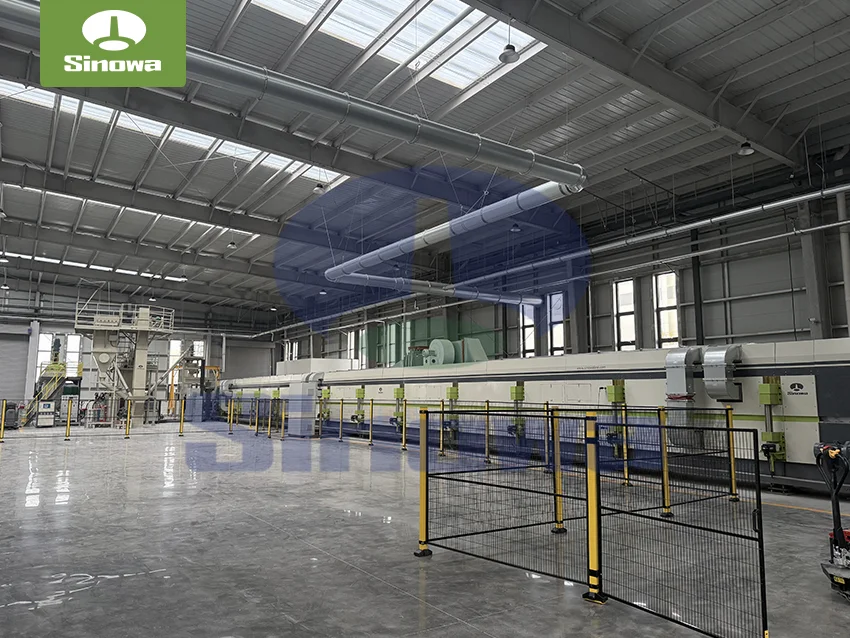
The high-temperature curing and constant temperature shaping stage is crucial for finalizing the structural stability and performance indicators of phenolic composite panels. After preliminary lamination and compounding, the semi-finished panels enter the segmented curing tunnel of the phenolic insulation board production line, which adopts multi-stage gradient temperature control technology. The whole curing area is divided into pre-heating, high-temperature curing, and heat preservation shaping sections, realizing gradual and thorough thermosetting reaction of phenolic resin. In the pre-heating section, the panel temperature rises steadily to eliminate internal stress generated in the lamination stage and prevent local deformation caused by rapid temperature change. In the high-temperature curing section, the phenolic resin undergoes complete molecular cross-linking reaction, forming a dense and stable three-dimensional network structure, which greatly improves the hardness, rigidity, and structural stability of the panel. The heat preservation shaping section further stabilizes the internal molecular structure of the panel, eliminating residual reaction stress and ensuring the flatness and dimensional stability of the panel surface. The closed insulation design of the curing tunnel reduces heat loss, maintains uniform temperature distribution in the working area, and ensures consistent curing effect of panels in different production positions.
Cooling and stress relief processes are essential to guarantee the long-term service stability of finished panels. After high-temperature curing, the panels have high surface temperature and internal residual stress, which may cause warping, deformation, or size deviation if directly processed. The phenolic panel production line is equipped with a segmented circulating cooling system, which adopts natural air cooling and auxiliary uniform air supply cooling modes to gradually reduce the panel temperature to room temperature. The gradual cooling method avoids structural damage and internal micro-cracks caused by rapid temperature drop, fully releasing the internal stress generated during high-temperature molding and curing. In the cooling transmission process, the automatic deviation correction system operates in real time to ensure linear and stable panel transmission, preventing offset and bending deformation. Meanwhile, the surface flatness detection module conducts real-time scanning on the panel surface to preliminarily screen out products with surface defects or structural abnormalities, realizing online quality preliminary inspection.
Precision cutting, edge trimming and surface finishing constitute the final processing stage of phenolic composite panel production. After full cooling and shaping, the continuous long-strip panels are transmitted to the fixed-length cutting unit. The intelligent cutting system sets precise cutting dimensions according to production requirements, realizing stable and accurate fixed-length cutting, with smooth and neat cutting sections without burrs or chipping. The edge trimming equipment performs fine trimming on the four sides of the cut panels to eliminate edge irregularities and residual burrs generated in the previous processes, ensuring consistent dimensional accuracy of each finished panel. For panels requiring high surface flatness and smoothness, the automatic sanding and polishing unit conducts fine surface treatment, removing tiny protrusions and uneven layers on the panel surface, improving surface texture and uniformity. In addition, the finishing process includes surface cleaning treatment to remove residual dust and attachments on the panel surface, ensuring the cleanliness and appearance quality of finished products.
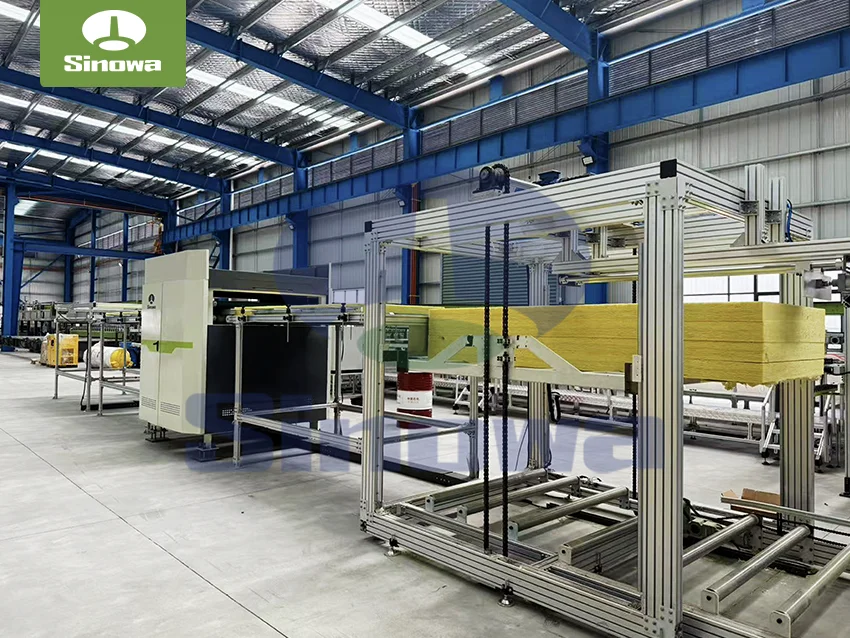
The final online quality inspection and automatic stacking system completes the whole production process of phenolic composite panels. The phenolic insulation board production line is equipped with multi-dimensional online detection modules, which conduct comprehensive inspection on the finished panels’ dimensional accuracy, surface flatness, internal structural uniformity, and surface integrity. The detection system automatically records and analyzes product quality data, screens out unqualified products with defects, and ensures that all delivered products meet consistent quality standards. Qualified finished panels are automatically transmitted to the stacking area, where the intelligent stacking device conducts orderly and standardized stacking according to fixed specifications, realizing neat storage of finished products and facilitating subsequent packaging, transportation and storage operations. The whole process from raw material feeding to finished product stacking is completed through automated assembly line operation, with minimal manual intervention, effectively improving production efficiency and product consistency.
The overall operational characteristics of the phenolic composite sandwich panel machine determine the excellent performance and stable quality of finished products. The fully closed continuous production mode avoids external environmental interference on material reaction and panel molding, ensuring that the physical and chemical properties of each batch of products remain stable. The multi-stage precise parameter control system realizes refined management of each production link from batching, mixing, foaming, lamination to curing and cooling, effectively controlling key indicators such as panel density, thermal insulation performance, structural strength, and dimensional stability. Compared with intermittent production equipment, the continuous production line has higher production efficiency, more stable product quality, and lower comprehensive production loss, which can meet the large-scale and standardized production demand of phenolic composite panels.
In practical industrial production applications, the composite sandwich panel production machine can realize flexible adjustment of panel thickness, density, and structural parameters by optimizing process parameters and adjusting equipment operating states, producing diversified phenolic composite panel products to adapt to different application fields. The produced phenolic composite panels retain the excellent flame retardancy, high temperature resistance, and chemical corrosion resistance of phenolic materials, while possessing improved structural toughness and impact resistance through composite lamination and optimized foaming processes. The panels feature light weight, high strength, low thermal conductivity, good sound insulation effect, and excellent weather resistance, which can maintain stable structural performance and service effect in high temperature, humid, corrosive and other harsh environments.
With the continuous upgrading of industrial manufacturing technology, the phenolic composite sandwich panel manufacturing line is gradually developing towards higher automation, intelligence and energy saving. The optimized structural design and intelligent parameter adjustment system further reduce energy consumption and material waste in the production process, improve the utilization rate of raw materials, and realize more environmentally friendly and efficient production. The real-time data monitoring and feedback adjustment function enables the production line to quickly respond to process changes and production demands, ensuring long-term stable and high-efficiency operation of the production system. As a core manufacturing equipment for high-performance composite insulation and structural materials, the phenolic composite panel production line provides reliable technical and equipment support for the wide application of phenolic composite panels in architectural insulation, industrial equipment protection, transportation facilities, and special engineering fields, and continuously promotes the technological progress and performance upgrading of composite panel manufacturing industry.
https://www.cnsinowa.com/sandwich-panel-machines/phenolic-composite-panel-production-line.html