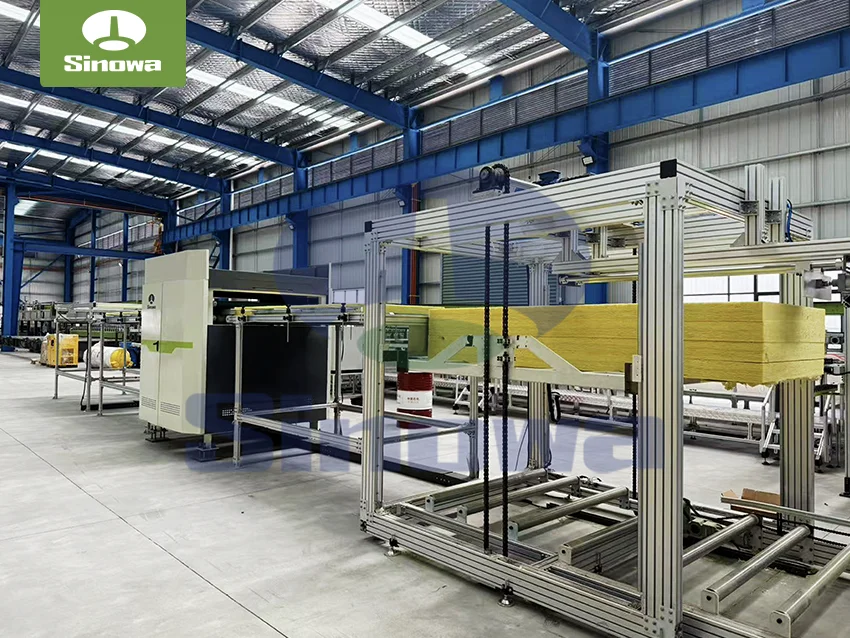
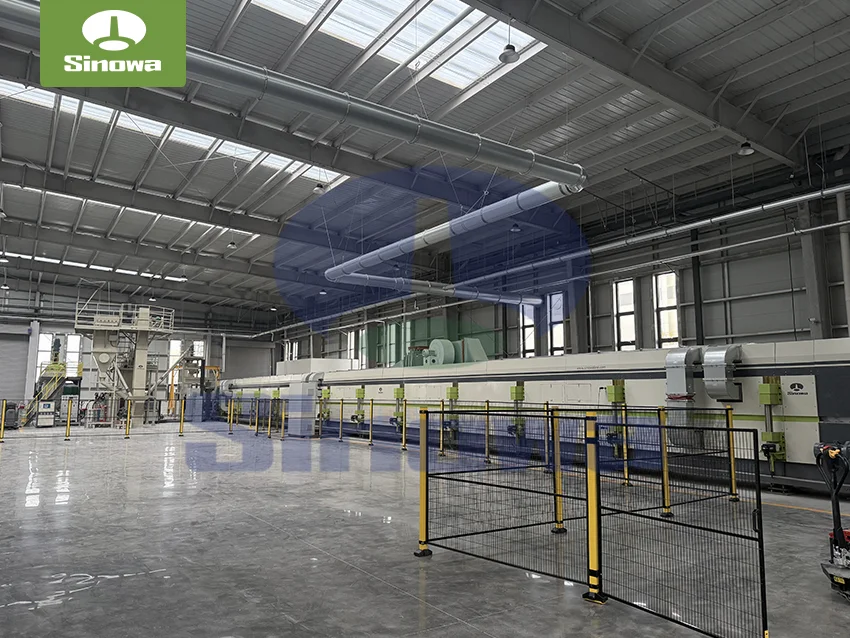
sandwich panel line
The inherent material advantages of phenolic foam lay a solid foundation for the widespread application of its production technology in various industrial sectors. Different from other common cellular polymer materials, phenolic foam features a compact closed-cell microstructure formed by the cross-linking polymerization of phenolic resin under specific chemical conditions. The internal pore structure is uniform and dense, which endows the material with extremely low thermal conductivity and outstanding heat preservation performance. In terms of fire resistance, phenolic foam does not melt or drip when exposed to high-temperature flames, and it generates minimal toxic smoke during combustion, meeting the stringent safety requirements of high-risk fire prevention scenarios. Additionally, the material exhibits excellent resistance to acid, alkali, and organic solvent corrosion, along with low water absorption and stable dimensional characteristics under varying temperature and humidity environments. These superior physical and chemical properties make phenolic foam indispensable in building thermal insulation, industrial pipeline insulation, cold chain storage facilities, chemical anti-corrosion engineering, and special industrial isolation fields. To stably mass-produce phenolic foam products with consistent performance, a professionally configured production line is essential, as manual intermittent production cannot meet the unified standards for pore structure, density, and mechanical strength of large-batch products.
A complete phenolic foam production line consists of multiple interconnected functional modules, each undertaking independent production tasks while maintaining precise coordination with adjacent modules to ensure the continuity and stability of the overall production process. The core equipment combinations cover raw material storage and delivery systems, automatic proportioning devices, high-shear mixing units, continuous foaming reaction systems, molding and curing equipment, trimming and cutting mechanisms, surface treatment assemblies, and waste recycling devices. Each module has its unique structural design and operational logic, and the collaborative operation of all modules constitutes the basic operational framework of the production line. The raw material storage and delivery system is the starting point of the entire production line, which is responsible for the sealed storage and quantitative transportation of various raw materials required for foam synthesis. The main raw materials involved in phenolic foam production include phenolic resin as the base matrix, acidic curing agents to trigger cross-linking reactions, physical foaming agents for pore structure formation, silicone-based stabilizers to maintain uniform bubble distribution, and functional additives for optimizing material toughness and anti-aging performance. All raw materials need to be stored in classified sealed tanks to avoid chemical deterioration caused by contact with external air, moisture, or dust impurities. The delivery system adopts pipeline transportation with flow control valves, which can accurately adjust the feeding speed of different raw materials and lay the foundation for subsequent precise proportioning.
The automatic proportioning device is a core functional component that determines the basic quality of phenolic foam semi-finished products. The chemical reaction process of phenolic foam is highly sensitive to the ratio of raw materials; minor deviations in the dosage of curing agents and foaming agents will directly lead to uneven pore size distribution, excessive residual monomers, insufficient curing degree, and other quality defects. Modern phenolic foam production lines are equipped with intelligent metering modules composed of digital flow meters and pressure sensing components. These components can monitor the real-time flow of each raw material in the transmission pipeline and feed the data back to the central control system. The system automatically adjusts the opening degree of the regulating valves according to the preset formula parameters to ensure that the feeding error of each raw material is controlled within an extremely narrow range. In actual production, the formula ratio needs to be dynamically adjusted according to the ambient temperature and humidity of the production workshop. For example, in low-temperature environments, an appropriate increase in the proportion of curing agents can accelerate the cross-linking reaction rate and compensate for the slow reaction efficiency caused by low temperature; in high-humidity environments, the dosage of foam stabilizers needs to be optimized to prevent bubble merging and collapse caused by moisture interference. The intelligent proportioning system can realize one-click parameter switching for different production formulas, facilitating the production line to switch between foam products of different densities and performances.
After the completion of raw material proportioning, the mixed materials will be transported to the high-shear mixing unit for homogeneous blending. The mixing unit is equipped with high-speed rotating stirring components and a sealed mixing cavity. Different from ordinary low-speed stirring equipment, the high-shear mixer can break up the agglomerated fine particles in the additives and disperse all raw materials into a uniform liquid mixture in a short time. During the mixing process, the internal temperature of the mixing cavity needs to be strictly controlled within a stable interval. Excessively high temperatures will cause the foaming agent to volatilize in advance, resulting in premature bubble formation and disordered pore structure; excessively low temperatures will reduce the molecular activity of the phenolic resin, making it difficult for various raw materials to fuse uniformly and leaving localized component segregation inside the mixture. The mixing time is also a key control indicator. Insufficient mixing time leads to uneven distribution of curing agents and stabilizers, while excessive mixing time will generate cumulative heat due to mechanical friction, which disrupts the pre-set temperature balance. The outer wall of the mixing cavity is usually equipped with a circulating water cooling jacket, which can dissipate friction heat in real time and maintain the constant temperature state of the mixed liquid throughout the mixing cycle.
The continuous foaming reaction system is the core section where phenolic foam completes phase change and pore structure formation. The uniformly mixed liquid raw materials are continuously injected into the closed foaming channel through a pressure pump. In the channel, under the dual effects of temperature induction and chemical catalysis, the phenolic resin undergoes rapid cross-linking polymerization reactions, and the low-boiling foaming agent vaporizes to generate a large number of tiny bubbles. With the continuous progress of the polymerization reaction, the resin molecular chains are continuously cross-linked and cured, gradually fixing the bubble structure to form a porous foam matrix. The internal pressure and temperature of the foaming channel are the critical parameters affecting the foaming effect. Appropriate micro-positive pressure can prevent the premature overflow of foaming gas and ensure the sufficient expansion of bubbles; gradient temperature settings can realize staged curing of the foam, avoiding internal cracking caused by excessive instantaneous reaction heat release. The structural design of the foaming channel adopts a linear long-channel layout, which enables the foam raw materials to complete gasification, expansion, and primary curing in the flowing state, realizing continuous large-scale production. Compared with the intermittent mold foaming process, the continuous foaming system has higher production efficiency and more consistent product pore uniformity.
After primary foaming and preliminary curing, the semi-finished phenolic foam enters the molding and curing equipment for deep shaping and aging treatment. The molding equipment is equipped with adjustable limiting baffles, which can control the thickness and width of the foam board according to production requirements and restrict the free expansion of the foam in the horizontal direction to ensure a flat and regular surface of the finished product. The curing section is a constant-temperature heat preservation channel with a long stroke, and the internal temperature is maintained within the optimal curing temperature range of phenolic resin. In this environment, the unreacted monomers inside the foam continue to undergo cross-linking reactions, the molecular structure becomes denser and more stable, and the mechanical strength, dimensional stability, and chemical durability of the material are significantly improved. The curing time is closely linked to the thickness of the foam product. Thick foam boards require a longer curing cycle to ensure that the internal core can fully complete the curing reaction and avoid the quality problem of internal softening and deformation caused by insufficient curing. During the curing process, the ventilation system inside the channel will slowly discharge the trace volatile gases generated by the reaction to keep the internal air circulation smooth and prevent gas accumulation from affecting the curing effect.
The post-processing module is responsible for trimming, cutting, surface finishing, and shaping of the cured phenolic foam semi-finished products. The foam extruded from the curing channel has irregular burrs and uneven edges on both sides, which need to be removed by automatic trimming equipment to ensure the neatness of the product edges. The fixed-length cutting device uses high-speed circulating cutting blades to cut the continuous foam plate into finished products of specified lengths. The cutting speed is synchronized with the transmission speed of the production line to avoid extrusion deformation of the foam caused by speed mismatch. For phenolic foam products used in high-precision application scenarios, the production line is also equipped with surface polishing and flattening components, which can remove tiny protrusions and concave defects on the foam surface to improve the surface flatness and aesthetic degree. In addition, some production lines are equipped with composite laminating units, which can attach protective layers such as aluminum foil and non-woven fabrics to the surface of phenolic foam boards online. The composite treatment can further enhance the moisture resistance, weather resistance, and surface wear resistance of the products, expanding the applicable scenarios of phenolic foam materials.
The waste recycling and tail gas treatment device is an indispensable auxiliary component of modern phenolic foam production lines, which undertakes the important tasks of reducing production costs and controlling environmental pollution. In the production process, edge trimming waste, cutting leftover materials, and defective foam products generated by parameter fluctuations will be centrally collected by the waste recycling system. After crushing, grinding, and fine screening, these waste materials are processed into uniform fine particles, which can be added into the raw material formula in a certain proportion for secondary foaming production. This recycling mode effectively reduces the waste of raw materials and improves the resource utilization rate of the production line. For the trace volatile organic gases generated during the foaming and curing reaction, the tail gas treatment device adopts adsorption and purification processes to filter harmful substances in the gas. After deodorization and purification, the gas meets the emission standards and is discharged, which reduces the impact of the production process on the surrounding atmospheric environment. The wastewater generated by the cooling circulating water system is subjected to precipitation and filtration treatment to realize cyclic reuse, reducing the overall water consumption of the production line.
The central intelligent control system runs through all functional modules of the phenolic foam production line and is the brain to coordinate the synchronous operation of each equipment. The system is composed of industrial control computers, data sensing elements, execution controllers, and human-computer interaction terminals. All temperature, pressure, flow rate, and transmission speed parameters in the production process are collected by high-precision sensors in real time and displayed on the interactive terminal in the form of digital curves. Production technicians can adjust the operating parameters of each module through the touch interface to realize formula switching, speed adjustment, and temperature calibration. When abnormal conditions such as pipeline blockage, temperature overrun, and raw material shortage occur in the production line, the intelligent system will automatically trigger an alarm prompt and perform emergency shutdown protection for faulty modules to prevent equipment damage and batch quality accidents. In addition, the system can record all production data in real time, including raw material consumption, operational parameter changes, and daily output, providing data support for production cost accounting, process optimization, and production schedule arrangement.
Multiple key technical parameters directly determine the comprehensive performance of phenolic foam products, and refined parameter control is the core of stable operation of production lines. The first key parameter is the raw material formula ratio. The dosage of the curing agent affects the curing speed and cross-linking density of the resin; an appropriate amount of curing agent can make the foam have a compact pore structure and high mechanical strength, while excessive curing agent will cause brittle foam and increased residual acid content. The addition amount of the foaming agent determines the foam density; a higher proportion of foaming agent can prepare low-density lightweight foam, but excessive dosage will lead to pore rupture and increased water absorption rate. The second key parameter is the reaction temperature. The temperature of the mixing section controls the uniformity of raw material mixing, the foaming temperature affects the bubble expansion state, and the curing temperature determines the final stability of the molecular structure. The third key parameter is the transmission speed of the production line. A slower transmission speed can prolong the reaction time and prepare high-density high-strength foam, while a faster speed is suitable for mass production of conventional lightweight thermal insulation foam. In actual industrial production, technicians need to combine the usage requirements of terminal products to formulate targeted parameter combination schemes.
Daily operation and maintenance management is crucial to extend the service life of phenolic foam production lines and maintain stable production quality. Before the official start of daily production, technicians need to conduct a comprehensive inspection of key equipment, including checking the tightness of raw material delivery pipelines to prevent liquid leakage, calibrating metering sensors to ensure accurate proportioning data, and testing the operating flexibility of stirring blades and cutting components. During the production process, it is necessary to regularly observe the foaming state of the foam, check whether there are defects such as hollow pores, surface cracks, and uneven thickness, and adjust parameters in a timely manner if abnormal conditions are found. After the daily production is completed, the residual raw materials in the mixing cavity and pipeline need to be thoroughly cleaned to avoid resin condensation and pipeline blockage caused by long-term residue. For wearing parts such as stirring blades and cutting blades, regular disassembly, inspection, and replacement are required to prevent product surface scratches and uneven cutting caused by component wear. The electrical control cabinet and sensor components should be kept dry and dust-proof to avoid circuit failure and data distortion caused by humid environment and dust accumulation.
With the continuous progress of industrial manufacturing technology, phenolic foam production lines are evolving towards automation, energy saving, environmental protection, and high precision. In terms of automation upgrading, more production lines adopt fully automated feeding, mixing, and molding integration technology, reducing manual intervention links and lowering the quality fluctuation caused by human operation errors. In terms of energy-saving optimization, the waste heat generated by the curing section is recovered and reused through the heat exchange system to provide preheating energy for the raw material storage tank, effectively reducing the overall energy consumption of the production line. In terms of environmental protection improvement, low-toxicity and low-volatility green additives gradually replace traditional chemical auxiliaries, and the closed-loop recycling system of raw materials is further optimized to minimize industrial waste discharge. In terms of precision manufacturing, micro-nano level pore structure control technology is applied to the foaming section, which can prepare ultra-fine pore phenolic foam products with lower thermal conductivity and better sound insulation performance.
Different types of phenolic foam production lines have obvious differentiation characteristics in structural configuration and application orientation. The small-scale intermittent production line has a simple equipment structure, low equipment investment cost, and flexible formula adjustment, which is suitable for small-batch customized production of special-shaped foam products and low-demand regional market supply. The medium-sized semi-continuous production line balances production efficiency and equipment cost, and is widely used in medium-sized manufacturing enterprises to produce conventional flat foam boards for construction insulation. The large-scale fully continuous production line adopts an integrated modular design, with high degree of automation, large daily output, and stable product consistency, which is suitable for large industrial manufacturers to meet the bulk procurement demand of engineering projects. In addition, some customized production lines are equipped with special processing modules, which can produce special phenolic foam products such as tubular casings, special-shaped parts, and composite sandwich plates to meet the personalized needs of different industrial fields.
In the industrial application chain, the stable operation of phenolic foam production lines provides reliable material support for multiple downstream industries. In the building industry, the flat foam boards produced by the production line are used for external wall thermal insulation, roof heat preservation, and indoor fire isolation of buildings. Their excellent flame retardancy effectively reduces the fire risk of building thermal insulation layers. In the petrochemical industry, high-density corrosion-resistant phenolic foam products are applied to the anti-corrosion and heat preservation layers of chemical storage tanks and reaction kettles, resisting the erosion of various chemical media. In the cold chain logistics industry, low-density low-water-absorption foam materials serve as the inner insulation layer of refrigerated warehouses and transportation containers, reducing energy consumption of constant-temperature equipment. In addition, phenolic foam produced by professional production lines also plays an important role in aerospace auxiliary facilities, municipal pipeline engineering, and industrial noise reduction projects. The continuous expansion of downstream application scenarios also puts forward higher requirements for the production accuracy, environmental protection performance, and diversification capacity of phenolic foam production lines.
Although the current phenolic foam production line technology has matured, there are still some technical bottlenecks to be broken through in the industrial production process. The brittleness of traditional phenolic foam is a common technical defect, which makes the material prone to chipping and cracking during transportation and installation. The existing production lines need to optimize the additive formula and foaming process to improve the internal toughness of the foam without reducing flame retardancy. In addition, the curing reaction of phenolic resin will generate trace acidic substances, which have certain corrosiveness to the production equipment. Long-term operation will accelerate the aging and wear of metal components. It is necessary to develop anti-corrosion coating materials for production equipment and optimize the post-reaction neutralization treatment process. Moreover, the production line still has room for improvement in terms of energy utilization efficiency. The heat loss in the curing channel and cooling system needs to be further reduced through intelligent temperature control and heat circulation technology.
Looking into the future, the development trend of phenolic foam production lines will be closely linked with green industrialization and intelligent manufacturing concepts. In terms of raw material optimization, bio-based phenolic raw materials extracted from natural plant resources will gradually replace part of petroleum-based raw materials, reducing the dependence of the production process on fossil energy. In terms of intelligent manufacturing, artificial intelligence algorithms will be introduced into the central control system to realize automatic prediction and early warning of production faults, intelligent optimization of process parameters, and unmanned operation of the whole production process. In terms of product upgrading, multi-functional composite phenolic foam with thermal insulation, fire resistance, sound insulation, and antibacterial properties will become the mainstream development direction, and the production line will realize one-step composite molding of multi-layer functional materials. In terms of environmental protection standards, the waste gas and wastewater treatment system of the production line will be further upgraded to achieve near-zero emission of pollutants and build a green and low-carbon phenolic foam manufacturing system.
In conclusion, the phenolic foam production line is a comprehensive industrial manufacturing system integrating chemical reaction technology, mechanical transmission technology, and intelligent control technology. Every equipment module and process parameter in the production line jointly affects the quality, performance, and production cost of foam products. With the continuous improvement of industrial manufacturing standards and the upgrading of terminal market demand, phenolic foam production lines are constantly moving towards higher efficiency, higher precision, lower energy consumption, and greener production. In the future, through continuous technological innovation, formula optimization, and equipment upgrading, phenolic foam production lines will break through the existing technical limitations, produce higher-performance and multi-functional foam materials, and provide more reliable material guarantees for the high-quality development of construction, chemical, cold chain, and other industries. Meanwhile, the continuous maturity of production line technology will further expand the application boundary of phenolic foam and enhance the important position of this environmentally friendly cellular material in the global new material industrial system.
https://www.cnsinowa.com/sandwich-panel-machines/phenolic-foam-production-line.html