 sandwich panel line
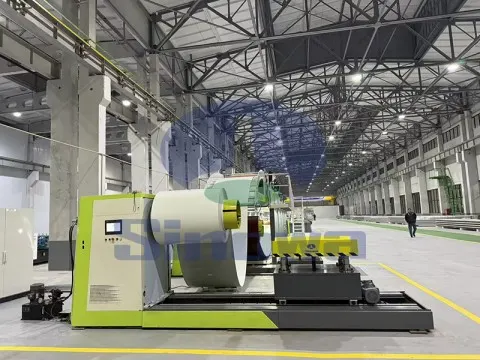
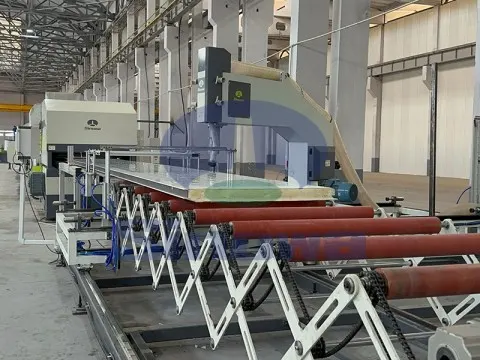
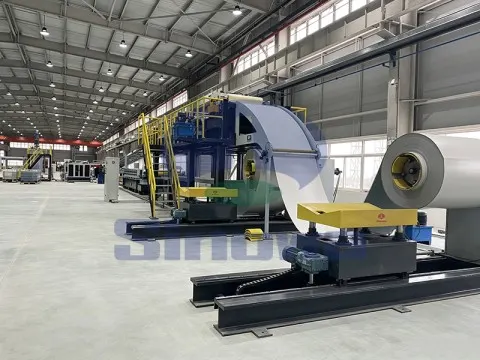
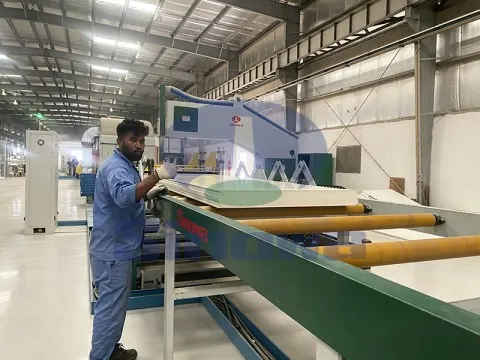
The continuous PU sandwich panel line serves as a versatile and highly automated production system tailored for standard composite insulation panel production, relying on mature polyurethane foaming and composite molding technologies to deliver stable and reliable production outputs. The entire production workflow operates on a synchronized track conveying system, where every processing link from metal sheet feeding to finished panel output is seamlessly connected without manual interruption. At the initial production stage, the line automatically completes the uncoiling, leveling, and surface cleaning of upper and lower metal substrates, removing surface impurities and static electricity to create optimal conditions for subsequent core material bonding. The core functional module of the PU line is the precision raw material metering and mixing system, which accurately proportions polyurethane polyol and isocyanate raw materials according to set production parameters. The well-mixed liquid PU material is evenly and continuously poured onto the lower metal substrate, avoiding local accumulation or sparse distribution that may cause inconsistent core material thickness. After material pouring, the upper substrate is automatically covered and laminated through a crawler pressing system, which applies uniform and stable pressure to bond the metal sheets and liquid core material tightly, preventing gaps and delamination during subsequent foaming and curing processes. This continuous lamination and pressing design ensures that each panel maintains a uniform three-layer composite structure, laying a solid foundation for consistent thermal insulation and mechanical performance of finished PU sandwich panels.
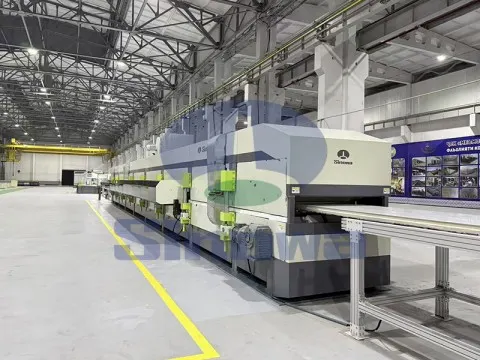
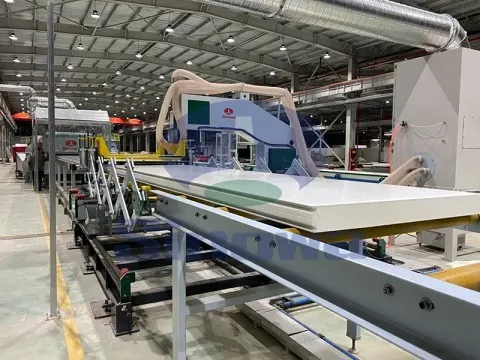
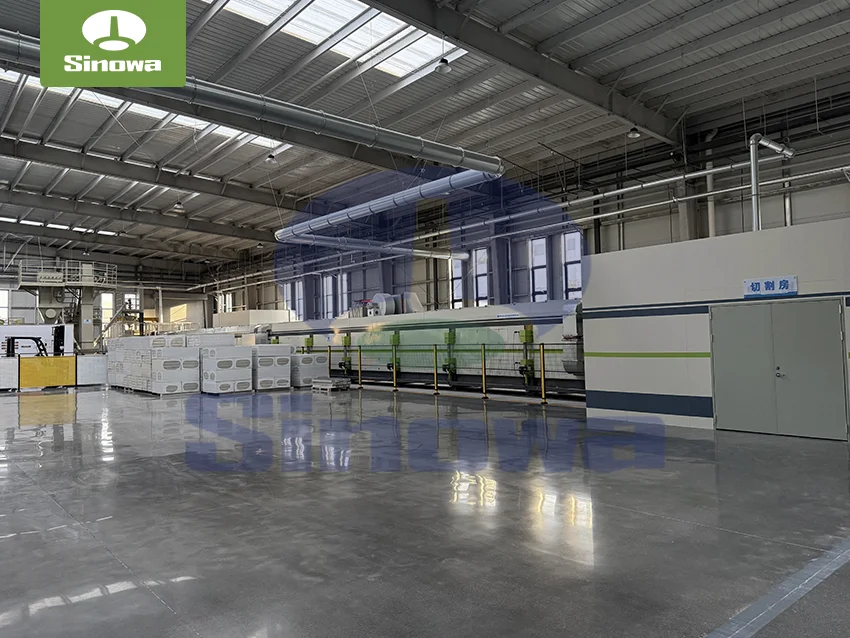
Following the lamination and pressing process, the constant-temperature curing and shaping system constitutes the core guarantee for the structural stability of PU sandwich panels in continuous production. The curing channel of the PU production line adopts an integrated thermal insulation structure, which maintains a stable internal temperature environment to ensure thorough and uniform foaming and solidification of polyurethane core materials. After entering the curing channel, the semi-finished composite panels move forward at a constant synchronous speed, allowing sufficient time for the PU material to complete chemical foaming reaction, pore forming, and molecular curing. The precise temperature control system avoids excessive temperature that leads to excessive foam pore expansion or low temperature that causes incomplete curing and soft core materials. During the curing process, the upper and lower crawler systems always maintain stable clamping pressure to offset the expansion pressure generated by PU foaming, effectively preventing panel surface deformation, warping, and core material bulging. Once fully cured, the panels are transported out of the curing channel and enter the automatic cutting process, where high-precision cutting equipment cuts the continuous long panels into standard fixed-length products according to preset specifications. The entire curing and cutting process operates in a fully automated cycle, ensuring that each batch of PU panels has consistent thickness, flatness, and core compactness, while greatly improving production efficiency compared with traditional intermittent production equipment.
Different from the conventional PU sandwich panel production line, the continuous PIR sandwich panel line is upgraded and optimized targeting the unique chemical reaction characteristics of polyisocyanurate materials, focusing on improving the thermal stability and structural robustness of finished panels. PIR materials are formed through further cross-linking reactions based on polyurethane components, featuring a more compact molecular structure and better high-temperature resistance, which puts forward higher requirements for production parameter control and equipment precision. The most prominent upgrade of the PIR production line lies in the raw material reaction control system, which adopts more accurate dynamic metering and real-time mixing adjustment functions. This system can finely regulate the raw material ratio and mixing speed according to the real-time reaction state of PIR materials, ensuring sufficient cross-linking reactions of molecular chains and forming a dense and stable foam core structure. In the substrate pretreatment stage, the PIR line optimizes the surface activation process of metal sheets to enhance the bonding affinity between the substrate and PIR core materials, effectively improving the interface bonding strength and avoiding delamination under long-term service conditions. The entire feeding and pretreatment process maintains high synchronization with the subsequent foaming process, adapting to the faster and more rigorous chemical reaction rhythm of PIR materials and ensuring the continuity and stability of mass production.
The foaming and composite molding process of the continuous PIR sandwich panel line is systematically optimized to adapt to the special curing characteristics of polyisocyanurate foam, achieving higher-quality core material molding effects. After precise mixing, the PIR liquid raw materials are evenly distributed on the lower substrate through a quantitative pouring system with higher flow accuracy, which effectively avoids the uneven density distribution caused by unstable material supply. The line adopts a graded pressure lamination mode, replacing the single-pressure mode of traditional PU lines. The graded pressure system applies low pressure in the initial foaming stage to reserve space for PIR molecular cross-linking and foaming expansion, and gradually increases pressure in the middle and later stages to compact the foam structure, ensuring uniform and fine internal foam pores without hollow holes or crack defects. Meanwhile, the temperature control system of the PIR curing area realizes zoned temperature regulation, forming a gradient temperature field that matches the whole reaction cycle of PIR materials. This zoned temperature control ensures that the early foaming reaction is fully initiated, the mid-term cross-linking reaction is fully completed, and the later curing shaping is stable and reliable. The optimized molding process enables PIR sandwich panels to have more stable structural performance, better dimensional stability, and stronger resistance to high-temperature deformation compared with ordinary PU panels.
The post-processing and quality stabilization system of continuous PU and PIR sandwich panel lines further refines the finished product quality and production adaptability, forming a complete closed-loop production system. After fixed-length cutting, both production lines are equipped with automatic edge trimming and surface finishing modules, which trim the irregular edges of panels generated in continuous production and clean surface residual impurities to ensure neat and uniform panel specifications. The finished product conveying and stacking system automatically arranges and stacks qualified panels according to set specifications, reducing manual handling errors and improving production tidiness. In terms of production adaptability, both lines support flexible adjustment of panel thickness, width, and production speed, which can quickly switch production parameters to meet the customized production needs of different application scenarios. The integrated automatic control system realizes synchronous linkage of all production links, dynamically adjusting parameters such as raw material supply volume, conveying speed, curing temperature, and lamination pressure according to production changes. This intelligent adjustment function effectively avoids product quality fluctuations caused by parameter mismatch, ensuring that both PU and PIR panels maintain stable and consistent quality in flexible and mass production modes.
In terms of production efficiency and operational advantages, continuous PU and PIR sandwich panel manufacturing lines both break through the limitations of traditional batch production equipment and deliver remarkable economic and production value. The fully continuous production mode eliminates the standby and debugging time between batches, greatly improving the unit time production capacity and realizing large-scale centralized production of sandwich panels. The high degree of automation reduces manual operation links, lowers the risk of human-caused quality errors, and reduces long-term labor and operation costs. The mechanical synchronization and precise parameter control technologies ensure extremely low product defect rates, with finished panels featuring uniform core density, stable thermal insulation performance, and firm interface bonding. The PU production line highlights cost-effectiveness and production flexibility, making it suitable for conventional building insulation, factory enclosure, and temporary building panel production. The upgraded PIR production line, with its optimized material reaction and molding system, produces panels with superior thermal stability and structural durability, suitable for high-temperature resistant, fire-resistant, and long-service-life engineering scenarios. The complementary performance and application positioning of the two lines meet the diverse and differentiated market demands for composite insulation panels.
With the continuous upgrading of composite material manufacturing technology, continuous PU and PIR sandwich panel manufacturing lines are constantly evolving towards higher precision, higher intelligence, and stronger environmental adaptability. Modern production lines continue to optimize raw material utilization efficiency through refined metering and precise reaction control, reducing raw material waste in the production process and improving the economic benefits of production. The intelligent monitoring system can real-time collect and analyze production data such as temperature, pressure, and speed of each processing link, realize early warning of abnormal production conditions, and further improve production stability and yield. In terms of application expansion, the two types of production lines can adapt to the production of multi-type substrate panels, including color steel plates, aluminum plates, and other composite substrates, expanding the application scope of finished panels. As the demand for high-performance insulation and structural composite panels continues to grow in the construction and industrial fields, continuous PU and PIR sandwich panel manufacturing lines will continue to play a core role in the industry, providing efficient, stable, and high-quality manufacturing solutions for modern composite panel production.
Sinowa is a professional manufacturer of sandwich panel machine in china, we provide diversified and high-performance sandwich panel production lines, including fully automatic continuous PU sandwich panel line and customized special lines to meet mass production and personalized order demands. These sandwich panel lines support processing multiple foam core materials, such as PU, PIR, mineral wool, rock wool and glass wool, covering different insulation and fireproof standards.
Featuring stable operation, high efficiency, energy saving and easy maintenance, our PU sandwich panel line deliver sandwich panels with excellent thermal insulation, fire resistance, sound insulation and lightweight durability. The finished panels are widely applied in industrial workshops, warehouse roofing and wall cladding, cold storage insulation, serving global construction and industrial insulation markets.
https://www.cnsinowa.com/sandwich-panel-machines/continuous-pu-pir-sandwich-panel-manufacturing-line.html