sandwich panel line
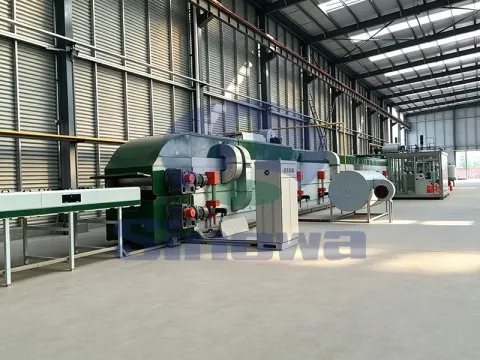
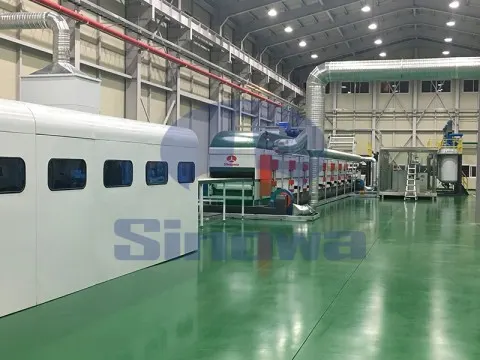
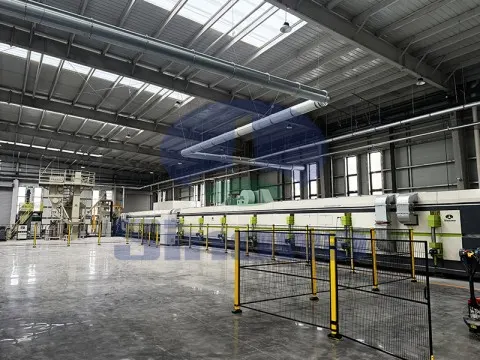
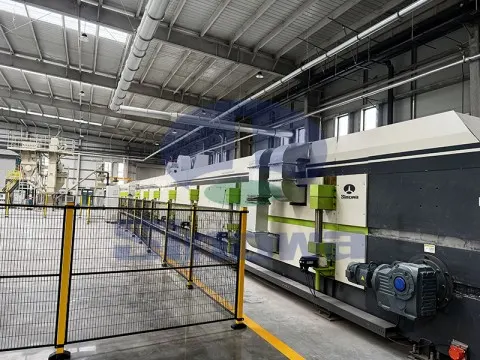
Delving into the structural composition of the glass wool insulation board production line, it is divided into several interconnected functional modules, each serving a critical role in the transformation of raw inputs into finished insulation boards. The initial phase revolves around raw material handling and batching, where primary materials such as silica sand, soda ash, limestone, and recycled glass are stored in dedicated silos, weighed with high precision, and mixed in predetermined ratios to form a homogeneous batch. This stage is pivotal, as the consistency of the raw material mix directly impacts the fiber quality and overall performance of the final product; precise weighing and mixing eliminate variations that could compromise thermal efficiency or structural integrity. Following batching, the mixture is transferred to a high-temperature melting furnace, where it is heated to temperatures exceeding 1400°C to convert the solid raw materials into molten glass with a smooth, flowable consistency. The furnace is engineered to maintain stable thermal conditions, preventing uneven melting and ensuring the molten glass is free of impurities that could weaken the resulting fibers.
The next critical module is fiber formation, the heart of the production process, where molten glass is converted into fine, interwoven glass fibers. The molten glass is channeled through a feeder to a centrifugal spinner, a high-speed rotating device with tiny perforations that propel the molten glass outward, stretching it into slender, uniform fibers. As these fibers form, a thermosetting resin binder is sprayed evenly onto their surface, acting as an adhesive to bond the fibers together and endow the final board structural stability. This binder application process is carefully regulated to ensure uniform coverage—excessive binder can increase density and reduce insulation efficiency, while insufficient binder leads to weak, fragile boards prone to crumbling. After binder application, the fibrous mass is collected on a moving conveyor belt, forming a thick, fluffy blanket that is then conveyed to the forming and curing section. Here, the blanket passes through a series of calibrated rollers that compress it to the desired thickness and shape, followed by a curing oven that heats the semi-finished board to activate the binder, locking the fibers in place and solidifying the board’s structure. The curing process is tightly controlled in terms of temperature and duration to achieve optimal rigidity without compromising the porous, air-trapping structure that defines glass wool’s insulation performance.
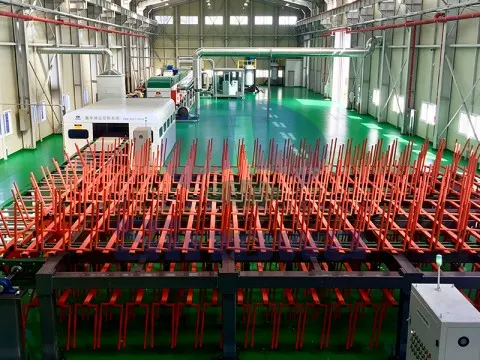
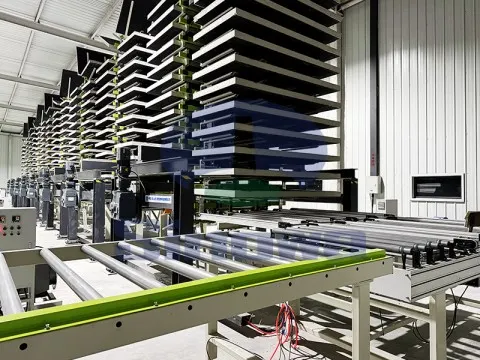
Post-curing, the production line moves into finishing and processing stages, where the cured glass wool blanket is trimmed to standard or custom dimensions using precision cutting equipment. Off-cuts generated during trimming are recycled back into the production stream, reducing material waste and enhancing the line’s sustainability. Depending on end-use requirements, some boards undergo additional surface treatment, such as the application of a protective facing to enhance moisture resistance or durability, though this is optional and tailored to specific application needs. Finally, the finished glass wool insulation boards are sorted, stacked, and packaged for storage and distribution, with automated stacking and packaging systems ensuring efficient handling and protection during transit. The entire production line is governed by automated control systems that monitor and adjust key parameters—including temperature, pressure, conveyor speed, and binder flow—in real time, reducing human error and ensuring consistent output even during prolonged operation. This seamless integration of modules creates a closed-loop production system that balances efficiency, quality, and sustainability, laying the foundation for high-performance glass wool insulation boards.
The structural and performance attributes of glass wool insulation boards are directly shaped by the production line’s precision processing and the inherent characteristics of interwoven glass fibers, making these boards stand out among conventional insulation materials. Structurally, each board features a porous, three-dimensional network of fine glass fibers, with countless tiny air pockets trapped within the fiber matrix. This unique porous structure is the key to its exceptional thermal insulation performance, as stationary air is a poor conductor of heat, significantly slowing the transfer of thermal energy through the board. The density of the fiber network can be adjusted during production to meet specific performance needs, with higher density boards offering enhanced structural rigidity and lower density boards prioritizing lightweight flexibility and superior thermal resistance. Unlike dense, non-porous insulation materials, glass wool’s fibrous structure allows for limited air permeability while maintaining excellent thermal barrier properties, striking a balance between insulation effectiveness and structural practicality.
In terms of thermal performance, glass wool insulation boards exhibit extremely low thermal conductivity, enabling them to effectively reduce heat transfer between indoor and outdoor environments, whether retaining heat in cold climates or blocking heat ingress in warm regions. This thermal efficiency translates to tangible energy savings in buildings and industrial facilities, reducing the load on heating, ventilation, and air conditioning (HVAC) systems and lowering long-term energy consumption. Beyond thermal insulation, the boards deliver outstanding acoustic performance, thanks to their fibrous structure that absorbs sound waves and dampens noise transmission. The interwoven fibers disrupt and dissipate sound energy, reducing reverberation and airborne noise, making the boards ideal for spaces requiring quiet, controlled acoustic environments. Additionally, glass wool insulation boards are inherently non-combustible, as glass fibers are inorganic and do not support combustion or propagate flames. This fire-resistant property adds a critical safety layer to applications, preventing the spread of fire and maintaining structural integrity for extended periods when exposed to high temperatures.
Other key performance traits include excellent chemical stability, moisture resistance, and long-term durability. Glass wool boards are resistant to corrosion, mold, mildew, and pest infestation, as the inorganic glass fibers do not provide nourishment for biological growth, ensuring the boards retain their performance and structural integrity in humid or damp environments. The low moisture absorption rate prevents water retention, which could otherwise degrade thermal efficiency and lead to structural damage over time. Furthermore, the boards are lightweight and easy to handle, cut, and install, adapting to diverse installation scenarios without requiring specialized tools or complex labor processes. They also exhibit good compressive strength, resisting deformation under moderate loads, which is essential for applications where the insulation board must support minor structural pressure or foot traffic. Collectively, these performance features make glass wool insulation boards a versatile, reliable choice for a wide range of insulation requirements, combining functionality, safety, and practicality.
Glass wool insulation boards are categorized into distinct types based on density, thickness, structural design, and functional enhancements, each developed to address specific application scenarios and performance demands, with variations introduced during the production process to tailor properties accordingly. The most common classification is based on density, which directly influences the board’s rigidity, thermal resistance, and load-bearing capacity. Low-density glass wool boards are lightweight, flexible, and optimized for maximum thermal insulation, making them suitable for applications where weight reduction and insulation efficiency are top priorities, such as interior wall cavities, suspended ceilings, and non-load-bearing partitions. Medium-density boards strike a balance between thermal performance and structural strength, offering improved rigidity and durability, ideal for general-purpose insulation in residential and commercial buildings, including exterior wall sheathing, floor insulation, and HVAC duct wrapping. High-density glass wool boards are engineered for maximum structural rigidity and compressive strength, designed to withstand heavier loads and harsher environmental conditions, commonly used in industrial settings, roofing systems, and areas requiring enhanced durability and impact resistance.
Another classification focuses on functional specialization, with boards modified during production to meet unique operational needs. Standard glass wool insulation boards serve as general-purpose products, delivering core thermal and acoustic insulation for everyday applications, with no additional surface treatments or functional enhancements, making them cost-effective and widely adaptable. Water-repellent glass wool boards are treated with moisture-resistant additives during the binder application stage, boosting their ability to repel water and resist moisture penetration, perfect for humid environments like basements, bathrooms, cold storage facilities, and outdoor insulation projects where moisture exposure is a concern. Acoustic-optimized glass wool boards are manufactured with a finer, more densely packed fiber structure to enhance sound absorption capabilities, specifically engineered for noise control in theaters, recording studios, office buildings, schools, and industrial workshops where acoustic comfort is critical. High-temperature resistant glass wool boards are formulated to withstand elevated operating temperatures, with adjusted fiber composition and curing processes to maintain structural and performance stability in high-heat environments, such as industrial furnaces, thermal pipelines, power generation facilities, and mechanical equipment insulation.
Additionally, glass wool insulation boards can be differentiated by thickness and dimensional specifications, with the production line capable of producing boards in a wide range of thicknesses (typically from a few millimeters to over a hundred millimeters) and standard or custom sizes to fit diverse installation requirements. Thinner boards are suitable for space-constrained applications, such as thin wall partitions and small-scale equipment insulation, while thicker boards offer enhanced thermal and acoustic performance for large-scale, high-demand projects. Some boards are also produced with laminated surfaces or reinforced edges to improve handling and installation durability, though these variations remain focused on functional utility rather than branding or certification. This diverse range of types ensures that glass wool insulation boards can be customized to meet the unique demands of nearly any insulation project, from small residential renovations to large-scale industrial and commercial developments.
The versatility of glass wool insulation boards, paired with their exceptional performance characteristics, drives their extensive use across a multitude of sectors, spanning residential construction, commercial building, industrial engineering, infrastructure development, and specialized mechanical applications. In the residential building sector, these boards are widely employed for thermal and acoustic insulation in walls, roofs, floors, ceilings, and attic spaces, helping homeowners maintain comfortable indoor temperatures year-round, reduce energy bills, and minimize external noise pollution. They are also used in interior partition walls to enhance privacy and acoustic separation between rooms, creating a quieter, more livable residential environment. The lightweight nature of the boards simplifies installation during new construction or renovation projects, reducing labor time and effort without compromising insulation performance.
In commercial construction, glass wool insulation boards are a staple for high-rise office buildings, shopping malls, hotels, schools, hospitals, and other public facilities, where energy efficiency, fire safety, and acoustic control are paramount. They are integrated into exterior wall systems to improve building energy performance, reduce HVAC operational costs, and comply with sustainable building standards. In commercial spaces with high foot traffic or noise generation, such as conference halls, restaurants, and retail areas, acoustic-optimized boards effectively mitigate noise, creating a comfortable and functional environment for occupants. The fire-resistant properties of the boards also enhance the overall safety of commercial structures, providing valuable time for evacuation and fire suppression in the event of a fire emergency.
Industrial applications represent another major segment for glass wool insulation boards, where they are used to insulate thermal pipelines, boilers, industrial furnaces, storage tanks, and HVAC systems in manufacturing plants, petrochemical facilities, power plants, and food processing units. These boards regulate temperature, prevent heat loss or gain, and protect workers from high-temperature surfaces, improving industrial operational efficiency and workplace safety. High-temperature resistant variants are particularly valuable in heavy industrial settings, maintaining insulation performance under extreme heat conditions and extending the service life of industrial equipment. Additionally, the boards are used in industrial workshops to reduce machinery noise, creating a safer and more comfortable working environment for employees.
Beyond construction and industry, glass wool insulation boards find specialized applications in transportation infrastructure, prefabricated buildings, and cold chain logistics. In transportation, they are used for insulation in railway carriages, shipping containers, and marine vessels, regulating internal temperatures and reducing noise during transit. Prefabricated and modular buildings rely on glass wool boards for their lightweight properties and quick installation, aligning with the fast-paced construction timelines of prefab structures while delivering reliable insulation. In cold chain logistics, water-repellent and thermal-efficient boards insulate cold storage warehouses and refrigerated transport units, maintaining consistent low temperatures and preserving the quality of perishable goods. They are also used in agricultural facilities, such as greenhouses and livestock barns, to regulate internal temperatures and create optimal growing or breeding environments.
The widespread adoption of glass wool insulation boards across these diverse sectors underscores their unmatched combination of thermal efficiency, acoustic performance, fire safety, durability, and versatility. The advanced, integrated design of the glass wool insulation board production line is the foundation of this success, enabling the consistent manufacturing of high-quality boards that meet the evolving demands of modern insulation applications. As global focus on energy conservation, sustainable construction, and environmental protection continues to intensify, the relevance of glass wool insulation boards and their production systems will only grow, driving further refinements in production technology to enhance performance, reduce environmental impact, and expand the range of applications. From residential comfort to industrial efficiency, glass wool insulation boards remain an indispensable solution for addressing thermal and acoustic insulation challenges across the built environment and industrial landscape, offering a reliable, sustainable choice for current and future insulation needs.
Sinowa is a professional manufacturer of sandwich panel machine in china, we provide diversified and high-performance sandwich panel production lines, including fully automatic continuous PU sandwich panel line and customized special lines to meet mass production and personalized order demands. These sandwich panel lines support processing multiple foam core materials, such as PU, PIR, mineral wool, rock wool and glass wool, covering different insulation and fireproof standards.
Featuring stable operation, high efficiency, energy saving and easy maintenance, our PU sandwich panel line deliver sandwich panels with excellent thermal insulation, fire resistance, sound insulation and lightweight durability. The finished panels are widely applied in industrial workshops, warehouse roofing and wall cladding, cold storage insulation, serving global construction and industrial insulation markets.
https://www.cnsinowa.com/sandwich-panel-machines/glass-wool-insulation-board-production-line.html