sandwich panel machine
At the core of every high-efficiency rockwool sandwich panel production line for cladding lies a series of interconnected, modular functional units that operate in seamless synchrony, creating a continuous, automated production flow from raw material input to finished panel stacking. The first stage of the process centers on the metal coil handling and forming system, which serves as the foundation for the panel’s outer protective layers. This unit begins with heavy-duty decoiling mechanisms that smoothly unwind large rolls of coated metal sheeting, eliminating wrinkles, warping, and uneven tension to ensure a perfectly flat base material. Following decoiling, precision leveling rollers refine the metal surface, removing any residual deformations and guaranteeing uniform thickness across the entire width of the sheet. Next, specialized roll forming stations shape the leveled metal into customized profiles tailored for cladding applications—these profiles may include interlocking edges, ribbed reinforcements, or flush surfaces designed to enhance installation efficiency, wind load resistance, and water drainage on building exteriors. The roll forming process is calibrated with micrometer-level accuracy, ensuring consistent profile dimensions that enable tight, secure panel-to-panel connections on site, eliminating gaps that could compromise thermal performance or allow moisture penetration. Throughout this stage, automated edge trimming units remove excess material and create clean, straight edges, preparing the upper and lower metal facings for bonding with the rockwool core.
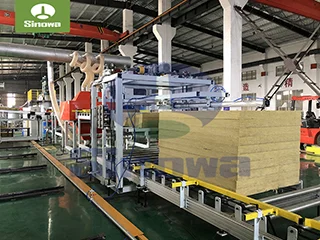
Parallel to the metal facing preparation process, the rockwool core processing system operates with equal precision, as the core is the heart of the panel’s functional performance for cladding systems. Rockwool, a mineral fiber material produced from natural volcanic rock and industrial slag through high-temperature melting, centrifugal spinning, and curing, offers exceptional non-combustibility, thermal insulation, and sound absorption—properties that make it indispensable for high-performance exterior cladding. The production machine’s core handling unit is designed to process pre-formed rockwool boards or continuous rockwool mats, cutting them to precise widths and thicknesses that match the specifications of the target cladding panels. Advanced cutting mechanisms ensure clean, splinter-free edges on the rockwool core, preventing fiber loss and maintaining the core’s structural density, which directly impacts the panel’s insulation efficiency and load-bearing ability. For cladding applications that demand enhanced weather resistance, some systems include a hydrophobic treatment module for the rockwool core, applying a thin, breathable protective layer that repels moisture without compromising the material’s vapor permeability, a key feature for preventing mold growth and thermal degradation in humid outdoor environments. The core is then conveyed along a stabilized, anti-slip conveyor belt to the bonding station, with automated positioning systems ensuring perfect centering and alignment between the upper and lower metal facings, eliminating core shift or uneven distribution that could weaken the final panel.
The bonding and composite pressing stage is arguably the most critical phase of the production process, as it determines the structural integrity and long-term stability of the rockwool sandwich panel for cladding use. This stage begins with a precision adhesive application system that distributes a specialized, high-strength bonding agent evenly across the inner surfaces of the upper and lower metal facings. The adhesive application is controlled by variable-speed metering pumps and adjustable spray nozzles, which ensure a uniform, consistent coating of adhesive across the entire surface, avoiding both insufficient coverage that leads to delamination and excessive application that causes material waste and uneven panel thickness. The adhesive used is formulated to cure quickly while maintaining flexibility, allowing the panel to withstand minor structural movements, temperature expansion and contraction, and wind-induced vibration without cracking or separating—essential qualities for exterior cladding that is constantly exposed to dynamic environmental conditions. Once the adhesive is applied, the three layers (upper metal facing, rockwool core, lower metal facing) are fed into a continuous double-belt pressing system, which applies uniform, controlled pressure across the entire panel surface. This pressing process compresses the layers tightly together, expelling trapped air bubbles that would weaken the bond and compromise insulation performance, while also setting the final thickness of the panel. The pressing system is equipped with adjustable pressure settings and temperature control modules, with gentle heating applied to accelerate adhesive curing without damaging the rockwool core’s fibrous structure, as excessive pressure or heat could compress the core and reduce its insulation and fire-resistant properties. The speed of the pressing belt is synchronized with the entire production line, ensuring a consistent curing time for every panel and maintaining uniform quality across full production runs.
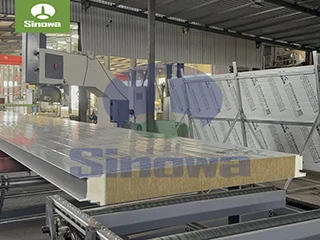
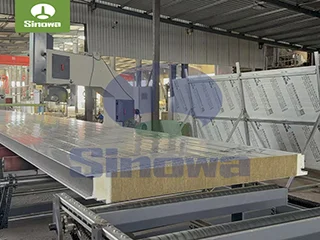
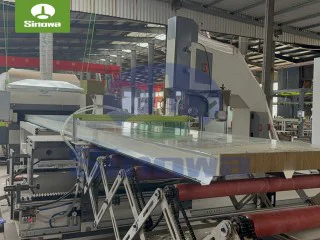
After the composite pressing and initial curing stage, the continuous panel strip moves to the precision cutting and finishing unit, which transforms the long, continuous panel into individual cladding panels of specified lengths. This cutting system utilizes high-precision, servo-driven cutting tools—such as circular saws or pneumatic cutters—that operate without stopping the production flow, maximizing overall efficiency and minimizing production downtime. The cutting length is programmed via the machine’s central control system, with digital sensors ensuring an extremely low margin of error, typically within a fraction of a millimeter, to meet the strict dimensional requirements of construction projects. Accurate cutting is vital for cladding panels, as even minor length discrepancies can lead to installation delays, poor fit, and compromised weatherproofing on building facades. Following cutting, the finished panels pass through a cooling and solidification station, where ambient air cooling or gentle forced air cooling completes the adhesive curing process and stabilizes the panel’s dimensions, preventing warping or shrinkage that could occur during storage or transportation. Some advanced production machines also include a surface inspection module at this stage, with optical sensors scanning for surface defects, uneven thickness, core exposure, or bonding flaws, automatically diverting non-conforming panels for rework or removal to ensure only top-quality panels enter the final processing stage. The final step involves an automated stacking and handling system, which gently lifts, aligns, and stacks the finished panels on pallets, ready for protective packaging and shipment to construction sites. This automated stacking eliminates manual handling damage, such as surface scratches, dents, or core breakage, preserving the panel’s aesthetic and structural quality for cladding installation.
One of the most significant advantages of modern rockwool sandwich panel production machines for cladding systems is their high degree of automation and intelligent control, which revolutionizes manufacturing efficiency and product consistency. These machines are equipped with advanced central control systems, typically featuring intuitive touchscreen interfaces and programmable logic controller (PLC) technology, which allows operators to set and adjust all production parameters—including panel thickness, width, length, production speed, adhesive flow rate, and pressing pressure—with minimal manual input. Once the parameters are programmed for a specific cladding panel specification, the entire production line runs autonomously, with real-time monitoring sensors tracking every stage of the process and automatically adjusting parameters to compensate for minor variations in raw material quality or environmental conditions. This level of automation drastically reduces the need for manual labor, minimizing human error and ensuring that every panel produced meets the same strict quality standards, regardless of production volume. Unlike older, semi-automatic production equipment, these modern machines can operate continuously for extended periods, with built-in fault detection and alarm systems that alert operators to potential issues—such as material jams, adhesive shortages, or mechanical malfunctions—before they cause significant downtime or quality defects. The modular design of the machine also enhances operational flexibility, allowing manufacturers to quickly switch between different cladding panel specifications, from thin, lightweight panels for residential exterior walls to thick, heavy-duty panels for industrial warehouse facades, without requiring extensive reconfiguration or downtime. This adaptability makes the machines suitable for both large-scale mass production and small-batch custom orders, catering to the diverse needs of the global construction cladding market.
The performance of rockwool sandwich panels produced by these specialized machines directly aligns with the core demands of modern cladding system design, making them a preferred choice for architects, engineers, and construction professionals worldwide. For thermal efficiency, the dense, fibrous rockwool core provides exceptional insulation, reducing heat transfer between the interior and exterior of a building, lowering energy consumption for heating and cooling, and contributing to green building certifications and sustainable construction goals. In terms of fire safety, rockwool is inherently non-combustible, and the fully bonded sandwich structure prevents the spread of flames, smoke, and toxic gases in the event of a fire—a critical safety feature for both residential and commercial buildings. The rigid metal facings and bonded core also deliver excellent structural strength, enabling the panels to resist wind loads, snow loads, and minor impact damage, while the interlocking profile design ensures a secure, stable cladding system that remains intact even in high-wind regions. Additionally, the rockwool core offers superior sound insulation, reducing external noise pollution from traffic, industrial activity, or weather, creating quieter, more comfortable interior spaces. These panels are also highly resistant to corrosion, rot, and pest infestation, thanks to the durable metal facings and inorganic rockwool core, ensuring long service life with minimal maintenance, which is a key consideration for exterior cladding that is exposed to the elements year-round. Unlike many alternative cladding materials, rockwool sandwich panels are also environmentally friendly, with the rockwool core being made from recycled and natural materials, and the panels themselves being fully recyclable at the end of their service life, aligning with the global push for circular economy principles in construction.
Proper operation and regular maintenance are essential to maximize the service life, production efficiency, and product quality of rockwool sandwich panel production machines for cladding systems, ensuring consistent performance over years of continuous use. Operators tasked with running these machines must undergo comprehensive training to understand the machine’s operational principles, control systems, safety protocols, and basic troubleshooting procedures, even with the high level of automation. Pre-operation inspections are a critical daily routine, including checks for mechanical wear on rollers and conveyors, proper calibration of sensors and cutting tools, sufficient adhesive and raw material supplies, and the functionality of safety guards and emergency stop systems. During production, operators monitor the central control panel for real-time data on production speed, temperature, pressure, and material flow, addressing any minor deviations immediately to prevent quality issues. Regular maintenance schedules are divided into daily, weekly, monthly, and annual tasks, with daily maintenance focusing on cleaning dust and debris from the machine, especially around the rockwool processing and adhesive application areas, to prevent fiber buildup and clogging. Weekly maintenance includes lubricating moving parts, inspecting conveyor belts for wear and tension, and calibrating sensors to maintain dimensional accuracy. Monthly and annual maintenance involves more in-depth checks, such as inspecting the pressing belts for damage, replacing worn cutting blades and rollers, testing the control system software, and servicing hydraulic and pneumatic components. Adhering to a strict maintenance plan not only prevents unexpected breakdowns and costly downtime but also preserves the machine’s precision, ensuring that every cladding panel produced meets the required performance and dimensional standards. Additionally, proper storage of raw materials—including keeping rockwool cores dry and metal coils protected from moisture and corrosion—directly impacts the quality of the finished panels, making material handling protocols an integral part of overall machine operation.
The evolution of rockwool sandwich panel production machines for cladding systems is closely tied to the ongoing advancements in construction technology and the growing global demand for sustainable, high-performance building materials. As the construction industry increasingly prioritizes energy efficiency, fire safety, and environmental responsibility, the demand for premium rockwool sandwich panels for exterior cladding continues to rise, driving further innovation in production machine design and technology. Modern machines are being developed with enhanced energy-saving features, such as high-efficiency motors, heat recovery systems, and low-power control components, reducing energy consumption during production and lowering the carbon footprint of panel manufacturing. Digitalization and smart manufacturing technologies are also being integrated, with Internet of Things (IoT) sensors collecting real-time data on production performance, equipment health, and product quality, allowing for remote monitoring, predictive maintenance, and data-driven process optimization. This digital transformation enables manufacturers to identify inefficiencies, predict potential equipment failures before they occur, and fine-tune production parameters to further improve product consistency and reduce material waste. Future iterations of these machines are also expected to offer even greater customization capabilities, allowing for the production of cladding panels with unique profiles, surface finishes, and core densities to meet the specialized needs of iconic architectural projects, high-rise buildings, and extreme-environment construction applications. Additionally, advancements in adhesive technology and material processing will further enhance the bond strength, durability, and environmental performance of the panels, making them an even more versatile and reliable choice for exterior cladding systems across residential, commercial, industrial, and public sectors.
Beyond their technical and manufacturing advantages, rockwool sandwich panel production machines for cladding systems play a vital role in supporting the global construction industry’s transition to more resilient, sustainable, and cost-effective building solutions. By enabling the large-scale, efficient production of high-quality cladding panels, these machines help make premium building materials more accessible to projects of all sizes, reducing construction timelines and labor costs on site due to the panels’ lightweight design and easy installation. Unlike traditional masonry or concrete cladding systems, rockwool sandwich panels are quick to install, requiring fewer labor hours and less heavy machinery, which accelerates project completion and reduces overall construction costs. The exceptional thermal insulation properties of the panels also translate to long-term operational cost savings for building owners, as lower energy consumption for heating and cooling leads to reduced utility bills over the building’s lifespan. Furthermore, the fire-resistant and durable nature of these panels minimizes the need for frequent repairs or replacements, reducing long-term maintenance costs and enhancing the overall value of the building. As urbanization continues to accelerate worldwide, and the demand for safe, energy-efficient, and aesthetically pleasing buildings grows, rockwool sandwich panel production machines will remain an indispensable part of the building materials manufacturing landscape, driving innovation in cladding technology and supporting the development of smarter, more sustainable built environments for generations to come. Every component of these machines is engineered with a clear focus on delivering consistent, high-performance cladding panels that meet the most demanding industry standards, solidifying their position as a cornerstone of modern exterior wall system manufacturing.
https://www.cnsinowa.com/sandwich-panel-machines/rockwool-sandwich-panel-production-machine-for-cladding-system.html