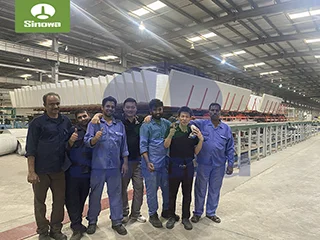
sandwich panel machine
Sandwich panel making equipment refers to a set of integrated automated mechanical units specially used for continuous or batch production of composite sandwich panels. Different from single-function processing machinery, this type of equipment combines multiple independent mechanical modules into an interconnected production line, which can complete raw material pretreatment, surface layer processing, core material arrangement, glue compounding, pressure shaping, constant temperature curing, fixed-size cutting and finished product output in a continuous mechanical flow. The overall design logic of the equipment follows the industrial manufacturing principles of continuity, high efficiency and standardization, and its mechanical structure is optimized according to the physical characteristics of different raw materials, so as to ensure that each produced sandwich panel maintains consistent thickness, flatness, bonding firmness and structural stability. In the actual industrial production scenario, sandwich panel making equipment can adapt to various raw material combinations, including metal color plates, non-metal inorganic plates as surface layers, and foam polymer materials, rock wool, inorganic lightweight aggregates as core layers, realizing the customized production of diversified composite panels to meet the differentiated usage demands of different industries.
The complete set of sandwich panel equipment consists of multiple interrelated and coordinated mechanical subsystems, and each subsystem undertakes an independent production link while maintaining a highly synchronous operating rhythm with other modules. The raw material conveying and pretreatment subsystem is the starting part of the entire production line, which is mainly responsible for the storage, automatic feeding and surface pretreatment of surface layer plates and core layer materials. For plate-shaped surface raw materials such as color-coated steel plates and galvanized plates, this subsystem is equipped with automatic unwinding devices and horizontal correction components. The unwinding structure adopts a mechanical damping design to ensure that the plate raw materials are discharged at a constant speed without tension deformation, and the correction devices can dynamically adjust the horizontal position of the plates during conveying to avoid lateral deviation in the subsequent processing links. At the same time, this subsystem is also equipped with surface cleaning and dedusting components, which use physical air blowing and friction scraping methods to remove dust, oil stains and oxide layers on the surface of the plates. Clean and smooth plate surfaces can effectively improve the bonding tightness between the surface layer and the core layer, and eliminate the composite defects such as hollowing and degumming caused by surface impurities. For bulk core materials such as granular lightweight aggregates and fibrous rock wool, the pretreatment subsystem is equipped with crushing, screening and uniform distributing structures to control the particle size and bulk density of the core materials, ensuring that the internal structure of the core layer is uniform and free of agglomeration gaps after molding.
Following the pretreatment link is the glue mixing and spraying subsystem, which is the key functional module to realize the composite bonding of sandwich panels. This subsystem mainly includes automatic batching devices, stirring components and quantitative spraying structures. In view of the adhesive raw materials used for panel compounding, the equipment adopts a fully enclosed automatic batching structure to realize the proportional mixing of different adhesives. The internal stirring blades are designed with a curved rotation structure, which can carry out high-speed homogeneous stirring of viscous adhesives, avoid the precipitation and delamination of adhesive components, and maintain the stability of adhesive viscosity and bonding activity during continuous production. The spraying part is equipped with atomized spray nozzles and intelligent flow control components. According to the preset production parameters, the equipment can evenly spray the adhesive on the inner surface of the surface plate in a fixed thickness. The atomized spraying technology makes the adhesive form a uniform thin film on the plate surface, which not only improves the bonding uniformity, but also avoids the excessive use of adhesives leading to material waste and panel surface bulging. In addition, the glue mixing and spraying subsystem is equipped with constant temperature protection components. Since the activity of most adhesives is greatly affected by temperature, the constant temperature structure can maintain the internal working temperature within a stable range, ensuring that the adhesive always maintains the best bonding performance in different seasonal production environments.
The core material laying and composite positioning subsystem undertakes the intermediate transition task in the production process, and its operation accuracy directly determines the internal structural uniformity of sandwich panels. After the surface plates are sprayed with adhesive, the plates are horizontally transported to the core material laying station through the conveying roller group. For flexible roll-shaped core materials, the equipment is equipped with automatic unwinding and flattening structures, which can continuously lay the core materials between the upper and lower surface plates at a constant speed; for rigid block core materials and granular aggregate core materials, the equipment adopts mechanical quantitative distributing and vibration leveling structures. The vibrating components with adjustable frequency can discharge the air gaps inside the core materials, increase the compactness of the core layer, and effectively enhance the overall compression resistance and thermal insulation performance of the finished panels. At the same time, this subsystem is integrated with an intelligent positioning sensor group. The sensors can monitor the laying position and thickness of the core materials in real time, and feed the data back to the central control system. Once the deviation of core material laying is detected, the mechanical transmission structure will automatically fine-tune the position to ensure that the core materials are completely aligned with the surface plates without edge deviation, laying a foundation for the subsequent integral pressing and molding.
The pressing and constant temperature curing subsystem is the core molding module of sandwich panel production equipment, which completes the permanent bonding and structural shaping of composite panels through the dual effects of mechanical pressure and constant temperature environment. The pressing structure mostly adopts multi-group roller pressing or hydraulic flat pressing design. The roller pressing equipment is suitable for continuous production of long-strip sandwich panels. The upper and lower groups of pressing rollers are arranged in parallel, and the spacing between the rollers can be accurately adjusted according to the preset panel thickness. The uniform mechanical pressure generated by the rollers makes the adhesive layer closely fit between the surface layer and the core layer, and squeezes out the redundant adhesives and residual air bubbles at the bonding interface. The hydraulic flat pressing structure is more suitable for batch production of short and fixed-size panels. The hydraulic system provides stable and lasting static pressure, which can make the composite structure more compact and improve the surface flatness of the panels. The interior of the pressing equipment is equipped with a fully enclosed thermal insulation curing chamber. The heating components adopt circulating heat conduction design, which can uniformly heat the composite panels in the chamber. The constant temperature environment can accelerate the chemical reaction and curing molding speed of adhesives, shorten the composite solidification cycle, and enhance the bonding strength between layers. In the actual production process, the system will dynamically adjust the pressing pressure and curing temperature according to the material characteristics of different surface layers and core layers, so as to avoid panel deformation, core layer melting and adhesive aging defects caused by excessive temperature or excessive pressure.
The fixed-size cutting and edge trimming subsystem is responsible for the final shaping of finished panels, realizing the unified specification and neat appearance of products. After the composite panels are cured and molded, they are continuously transported to the cutting station by the conveying device. This subsystem is equipped with high-precision servo cutting components and automatic edge trimming structures. The servo cutting system can receive the size parameters input by the control terminal, and complete the fixed-length transverse cutting of the panels at a stable conveying speed. The cutting tool is made of high-hardness wear-resistant materials, which can keep the cutting edge smooth and burr-free during long-term high-frequency cutting operation. The edge trimming structure is arranged on both sides of the conveying track, which can trim the redundant edge materials on both sides of the panels to ensure that the width of each panel is consistent. In addition, this subsystem is also equipped with an edge sealing auxiliary structure. For the sandwich panels that need edge sealing treatment, the mechanical arm can automatically apply edge sealing materials to the cutting sections, which effectively prevents moisture penetration and internal core material corrosion, and extends the service life of the panels. All cutting and trimming actions are controlled by the intelligent program, which can avoid the size error caused by manual operation and improve the dimensional accuracy of finished products.
The last part of the equipment is the finished product sorting and conveying subsystem, including finished product output rollers, automatic stacking devices and temporary storage platforms. The sorted finished panels are transported to the stacking area through the conveying structure. The mechanical stacking arm adopts a flexible clamping design, which can avoid extrusion damage to the panel surface during the stacking process. According to the production rhythm, the equipment can automatically complete layered stacking and neat arrangement of finished products, and the stacked panels are placed on the temporary storage platform to wait for subsequent packaging and transportation. This subsystem realizes the automatic separation between finished products and semi-finished products, avoids the confusion of materials in the production line, and simplifies the manual handling work in the production process, effectively improving the overall production efficiency.
In terms of operation logic and production process, the working flow of sandwich panel making equipment presents a continuous and closed-loop mechanical circulation state. Before the official production starts, the staff needs to complete the pre-production debugging work, including checking the tightness of each mechanical connection part, calibrating the conveying speed of the roller group, setting the curing temperature and pressing pressure parameters, and testing the sensitivity of the induction sensors. After the debugging is completed, the raw materials are installed on the unwinding and feeding mechanism, and the central control system is started to make the equipment enter the automatic operation mode. The surface plates are continuously discharged from the unwinding device, and pass through the cleaning and correction structure to remove surface impurities and adjust the horizontal position. Then the plates enter the spraying station, and the evenly mixed adhesive is sprayed on the inner surface of the plates in a fixed amount. Subsequently, the core materials are evenly laid on the adhesive surface through the distributing mechanism, and the composite plates with layered structure enter the pressing curing chamber with the transmission of the roller group. Under the combined action of pressure and constant temperature, the adhesive is completely cured, and the surface layer and the core layer are tightly bonded into an integral composite plate. After cooling and shaping, the plates are transported to the cutting station for fixed-length cutting and edge trimming, and finally stacked and stored by the automatic stacking device. The whole production process does not require excessive manual intervention, and the equipment can realize uninterrupted continuous production, which greatly reduces the labor cost and human error rate in the production process.
From the perspective of technical characteristics, modern sandwich panel making equipment has obvious advantages in automation level, structural stability and production flexibility. In terms of automation control, the equipment adopts an integrated intelligent control system, and all operation parameters are displayed on the touch control terminal in real time, including material conveying speed, glue spraying amount, pressing pressure, curing temperature and cutting size. The control system has an automatic early warning function. When abnormal conditions such as material blockage, parameter deviation and mechanical failure occur in a certain link of the production line, the system will automatically trigger the alarm prompt and suspend the operation of the faulty module to avoid large-area defective products and mechanical collision damage. In terms of mechanical structure design, the main frame of the equipment is made of thick metal profiles with anti-rust and anti-corrosion treatment on the surface. The overall frame has high structural rigidity, which can maintain stable mechanical operation state under long-term high-load working conditions and avoid vibration and displacement during production leading to product quality fluctuations. The connection parts of each functional module are equipped with shock absorption and buffering components to reduce the mechanical vibration noise generated during operation and improve the stability of the production environment.
Production flexibility is another prominent technical feature of sandwich panel making equipment. By replacing the raw material feeding components and adjusting the operating parameters, the same production line can complete the production of different types of sandwich panels. For example, by changing the unwinding brackets of surface plates, the equipment can switch between metal plates and non-metal inorganic plates; by adjusting the core material distributing structure, it can adapt to the laying processing of flexible fiber core materials and rigid foam core materials. In addition, the equipment can freely adjust the thickness and length of finished panels through parameter setting, which can meet the customized production requirements of panels with different specifications in the construction market. The modular assembly design is adopted for the external structure of the equipment, and each functional subsystem is an independent detachable module. When a single module fails, the staff can carry out independent disassembly, maintenance and replacement without affecting the normal operation of other modules, which effectively reduces the maintenance difficulty and downtime loss of the equipment.
In the actual industrial production process, the daily maintenance and standardized operation of sandwich panel making equipment are crucial to extend the service life of the equipment and maintain stable product quality. In terms of daily routine maintenance, the staff needs to carry out surface cleaning and dust removal on the equipment every day after production, focusing on cleaning the residual adhesives, core material debris and metal dust on the conveying rollers, cutting tools and spraying nozzles. The residual adhesives that are not cleaned for a long time will solidify and adhere to the mechanical surface, which will affect the conveying flatness and spraying uniformity of subsequent raw materials. The transmission gears, chains and bearing parts of the equipment need to be regularly filled with lubricating oil to reduce mechanical friction loss and avoid abnormal noise and jamming during operation. For the electrical control components and sensor parts, it is necessary to keep the working environment dry and clean to prevent dust and moisture from causing short circuit failure and signal deviation of electronic components.
Regular deep maintenance needs to be carried out in accordance with the operating cycle of the equipment, including checking the tightness of all bolted connections, calibrating the detection accuracy of temperature sensors and pressure sensors, polishing and maintaining the cutting tools, and testing the operating sensitivity of the hydraulic and pneumatic systems. The aging and damaged sealing gaskets and conveying belts need to be replaced regularly to prevent material leakage and conveying slipping problems. In addition, the staff should formulate standardized operation specifications, and strictly prohibit overloading the equipment for production. For the production panels beyond the designed processing range of the equipment, blind processing is not allowed to avoid irreversible deformation and structural damage of the mechanical frame. Before each startup, the idling inspection of the equipment should be completed to confirm that there is no abnormal sound and stuck condition in each transmission part, so as to ensure the safe and orderly production work.
Although sandwich panel making equipment has mature manufacturing technology and stable operating performance, it still has certain application limitations and technical deficiencies in the actual industrial scenario. In terms of production adaptability, most of the conventional sandwich panel making equipment is suitable for large-scale standardized panel production, and the production efficiency will be significantly reduced when facing small-batch and highly customized special-shaped panels. Some equipment with compact structure has insufficient processing capacity for ultra-thick and ultra-large-size sandwich panels, and it is easy to have uneven internal pressure and incomplete bonding during the pressing process. In terms of raw material adaptability, the existing conventional equipment has poor compatibility with some high-viscosity special adhesives and ultra-light new core materials, which requires additional modification of feeding and stirring structures to meet the production requirements. In addition, although the automation degree of the equipment is constantly improved, the early installation and commissioning work is complicated, requiring professional technicians to complete the line connection, parameter debugging and system testing work, and the technical threshold for equipment operation and maintenance is relatively high for small-scale processing enterprises.
From the perspective of industrial application value, the popularization and application of sandwich panel making equipment have profoundly changed the production mode of building composite materials and promoted the high-quality development of the construction industry. In the industrial building field, the equipment can efficiently produce large-area thermal insulation sandwich panels, which are widely used in the construction of factory workshops and logistics warehouses. The panels produced by the equipment have light weight and high strength, which can reduce the self-weight load of the building structure and shorten the construction cycle of industrial buildings. In the cold chain storage industry, the composite panels with low thermal conductivity produced by professional equipment can build closed constant-temperature storage spaces, effectively reducing the energy consumption of refrigeration equipment and realizing energy-saving operation of cold chain facilities. In the field of municipal construction and temporary buildings, the equipment can produce fast-assembled sandwich panels with simple installation process, which are suitable for temporary office buildings, emergency rescue houses and mobile isolation facilities, providing convenient material guarantee for rapid municipal construction.
In addition to the construction field, sandwich panel making equipment also provides reliable material support for the transportation and packaging industries. The lightweight and shock-resistant composite panels produced by the equipment can be used for the internal partition and thermal insulation lining of special transportation vehicles such as refrigerated trucks and insulation carriages. The panels have good weather resistance, which can maintain stable structural performance in high and low temperature alternating environments and protect the safety of transported goods. In the packaging manufacturing industry, thin composite sandwich panels can be processed into buffer packaging boxes and outer protective plates, which have the advantages of compression resistance and moisture resistance, and can replace part of wooden and plastic packaging materials to reduce the consumption of non-renewable resources.
With the continuous progress of global industrial manufacturing technology and the improvement of environmental protection production standards, the future development trend of sandwich panel making equipment will focus on intelligent upgrading, green energy saving, flexible customization and modular integration. In terms of intelligent technology, the equipment will be combined with industrial Internet and big data monitoring technology to realize real-time collection and cloud analysis of production data such as material consumption, production output and product qualification rate. The artificial intelligence algorithm will automatically optimize the production parameters according to the raw material characteristics and production requirements, realizing adaptive intelligent production. The fault diagnosis function of the equipment will be further upgraded, which can accurately locate the faulty parts and give intelligent maintenance suggestions, reducing the difficulty of manual maintenance.
In terms of green and energy-saving optimization, the new generation of sandwich panel making equipment will adopt high-efficiency energy-saving heating components and frequency conversion transmission motors. The frequency conversion technology can adjust the operating power of the equipment according to the production load, avoiding the energy waste caused by long-term high-power idling of the equipment. The internal heating and heat preservation structure will be optimized to reduce heat loss in the production process and improve the utilization rate of thermal energy. At the same time, the equipment will be equipped with waste recycling devices, which can collect and reprocess the edge trimming waste and residual raw materials generated in the production process, realizing the recycling of raw materials and reducing the generation of industrial solid waste. The optimized sealing structure can reduce the volatilization of harmful substances in adhesives, making the production process more environmentally friendly and safe.
Flexible customization capability will become an important development direction of the equipment. The improved production line will adopt multi-dimensional adjustable mechanical structure, which can quickly switch production modes between standard panels and special-shaped panels, and meet the personalized production requirements of different industries for panel size, shape and material combination. The compatibility of the equipment for new environmental protection raw materials will be further enhanced, adapting to the processing requirements of degradable adhesives, inorganic fireproof core materials and new composite surface plates, and matching the development trend of green building materials in the market. In terms of modular integration, the equipment will realize more compact spatial layout, and the combined installation mode can reduce the floor space of the production line. The standardized interface design between modules is convenient for equipment disassembly, transportation and reconstruction, improving the application flexibility of the equipment in different production sites.
In conclusion, sandwich panel making equipment, as the core mechanical equipment in the composite building material industry, has a complete and scientific structural system and mature production process. Each functional subsystem of the equipment cooperates with each other to realize efficient, standardized and automated production of sandwich panels. With the advantages of stable operation, strong compatibility and convenient maintenance, the equipment provides high-quality composite panel products for multiple industries such as construction, logistics and transportation, and creates important economic and social value. Although the current conventional equipment still has limitations in customized production and raw material adaptation, with the continuous innovation of mechanical manufacturing technology and intelligent control technology, the future sandwich panel making equipment will develop towards higher intelligence, lower energy consumption and stronger flexibility. It will further optimize the production efficiency and product quality of composite panels, continuously expand the application scope of sandwich panels in emerging industries, and make greater contributions to the green transformation and high-quality upgrading of the global building materials manufacturing industry.
https://www.cnsinowa.com/sandwich-panel-machines/sandwich-panel-making-equipment.html