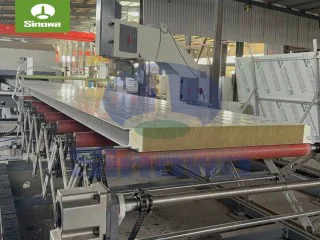
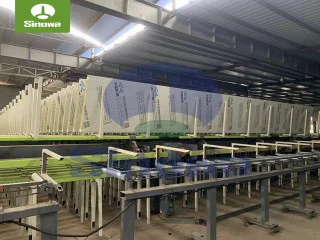
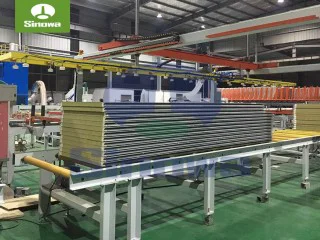
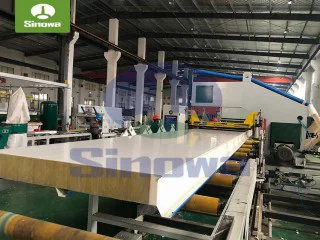
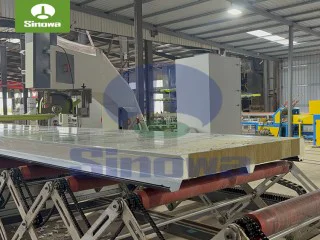
sandwich panel line
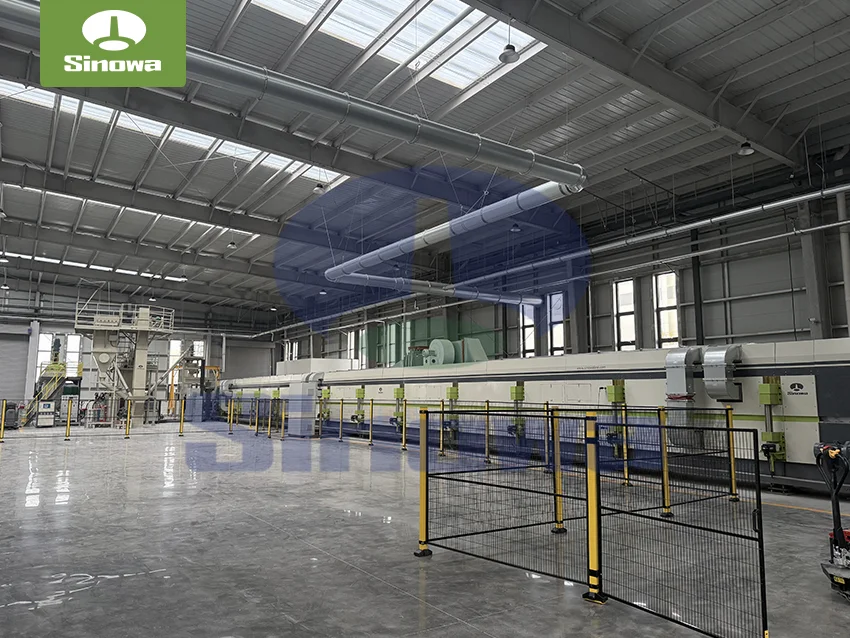
At its core, the rock wool sandwich panel manufacturing line is a continuous, automated system designed to streamline the production process from raw material handling to final product packaging. The integration of mechanical, electrical, hydraulic, and chemical reaction technologies ensures seamless operation, minimizing human intervention while maximizing productivity and product uniformity. Unlike traditional discrete production methods, continuous lines enable uninterrupted manufacturing, reducing downtime and material waste. This continuity is particularly critical for industrial applications, where large-volume orders and tight project timelines require reliable production capacity. The line’s modular design also allows for flexibility, accommodating different panel specifications—including varying thicknesses, widths, and lengths—to suit the unique requirements of diverse industrial building projects.
The production process begins with the preparation and handling of raw materials, a stage that directly impacts the final panel’s performance. The outer layers typically consist of coated steel sheets, chosen for their durability, corrosion resistance, and structural strength. These coils are fed into the line via an uncoiling system, which ensures smooth, consistent feeding without deformation. The uncoiling system is equipped with tension control mechanisms to prevent stretching or wrinkling of the sheets, maintaining their flatness and structural integrity. Before entering the forming stage, the sheets may undergo surface treatment processes, such as filming or cleaning, to enhance adhesion with the core material and improve long-term weather resistance. The quality of the steel sheets is closely monitored at this stage, with strict checks for thickness uniformity and surface defects to avoid compromising the final product.
Following uncoiling, the steel sheets move to the roll forming system, a key component that shapes the sheets into the desired profile. Advanced roll forming technology uses a series of precision rollers to gradually bend the steel into specific configurations, such as corrugated or flat profiles, depending on the application. This process is controlled by digital servo and frequency conversion vector technologies, which ensure high accuracy and repeatability. The ability to adjust forming parameters quickly allows the line to switch between different panel designs efficiently, supporting customization for specific industrial building needs. For example, panels used for roofing may have a corrugated profile for enhanced water drainage, while wall panels might be flat for easier installation and surface finishing. The roll forming stage is critical for achieving the structural stiffness of the panels, as the profile directly influences their load-bearing capacity.
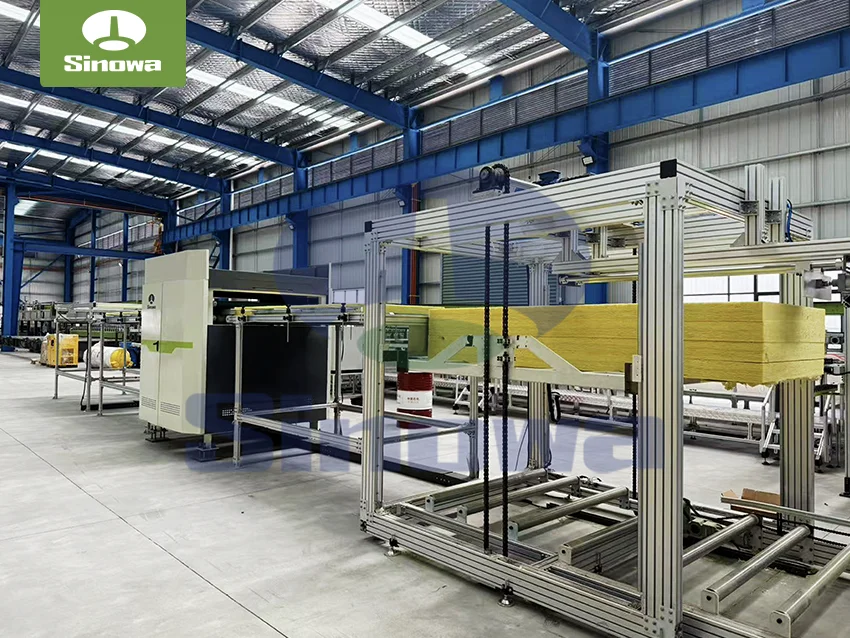
Parallel to the steel sheet processing, the rock wool core material is prepared and fed into the line. Rock wool, an inorganic fibrous material derived from natural minerals, is chosen for its non-combustible properties, excellent thermal insulation, and sound absorption capabilities. The core material is typically supplied in bulk and processed through a series of systems to ensure uniform density and fiber alignment. The rock wool feeding system uses automated mechanisms to distribute the material evenly between the upper and lower steel sheets, preventing gaps or uneven thickness that could reduce insulation performance. In some advanced lines, the rock wool is pre-treated with binders to enhance its structural stability and adhesion to the metal sheets. The fiber length of the rock wool is a key factor in its performance—longer fibers contribute to higher tensile strength and better acoustic insulation, making them ideal for industrial environments where noise control and structural durability are essential.
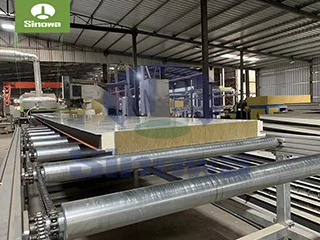
Once the steel sheets are formed and the rock wool core is positioned, the composite assembly process begins with adhesive application. The upper and lower adhesive spraying systems distribute a uniform layer of adhesive onto the inner surfaces of the steel sheets, ensuring strong bonding with the rock wool core. The choice of adhesive is critical, as it must withstand high temperatures, moisture, and mechanical stress while maintaining bond strength over time. Some production lines incorporate side seal foaming technology to fill the edges of the panels, enhancing thermal insulation and preventing moisture penetration. The foaming process is carefully controlled to ensure consistent density and expansion, avoiding voids that could compromise the panel’s performance. After adhesive application, the steel sheets and rock wool core are brought together in a laminating system, which applies pressure to ensure full contact and uniform bonding across the entire panel surface.
The double belt system plays a vital role in the curing and shaping of the composite panels. This system consists of two continuous belts that sandwich the panel assembly, applying consistent pressure and heat as the panels move through the line. The heating system ensures proper curing of the adhesive and foam, enhancing the structural integrity of the panels. The temperature and pressure parameters are precisely controlled to match the material properties, preventing overheating or under-curing. The length of the double belt system determines the curing time, with longer belts allowing for slower, more thorough curing—critical for achieving optimal bond strength and panel stability. As the panels move through the double belt system, they are maintained in a flat, uniform shape, ensuring dimensional accuracy and consistency across the production batch.
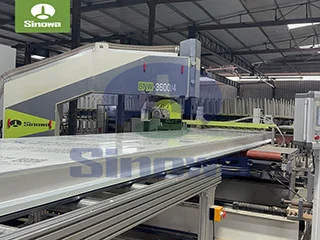
After curing, the panels proceed to the cutting system, where they are trimmed to the required length. The cutting system uses high-precision band saws or circular saws, controlled by numerical control technology to ensure clean, straight cuts with minimal material waste. The cutting parameters are programmable, allowing for quick adjustments to different panel lengths—from short sections for partition walls to long spans for roofing applications. The minimum and maximum cutting lengths are determined by the line’s design, with most systems capable of handling lengths ranging from a few meters to over ten meters. After cutting, the panels undergo a quality inspection to check for dimensional accuracy, bond strength, and surface defects. Any panels that fail to meet the quality standards are removed from the production line, ensuring only high-quality products move forward to the next stage.
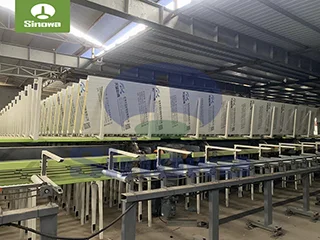
The final stages of the production process include stacking, packaging, and handling. The stacking system uses automated mechanisms to arrange the panels in neat, stable piles, minimizing damage during storage and transportation. The stacking process is carefully controlled to avoid pressure points that could deform the panels, particularly important for thinner panels or those with delicate surface finishes. Packaging systems typically use protective films or wrapping materials to shield the panels from scratches, moisture, and dust during transit. Some lines also incorporate labeling systems to identify panel specifications, facilitating easy handling and installation on construction sites. The entire end-of-line process is designed to optimize logistics, with stacked and packaged panels ready for direct delivery to industrial building projects.
The performance advantages of rock wool sandwich panels produced by these advanced lines make them particularly well-suited for industrial buildings. Their non-combustible rock wool core provides exceptional fire resistance, a critical safety feature in industrial settings where flammable materials or high-temperature processes are common. Unlike foam-based core materials, rock wool does not burn or emit harmful fumes when exposed to fire, helping to contain fires and protect building occupants and assets. The thermal conductivity of rock wool is relatively low, ensuring effective insulation that reduces energy consumption for heating and cooling industrial facilities. This energy efficiency not only lowers operational costs but also contributes to sustainability goals by reducing carbon emissions.
Acoustic performance is another key benefit of rock wool sandwich panels in industrial environments. The dense, fibrous structure of the rock wool core absorbs sound waves, reducing noise transmission between different areas of the facility and minimizing the impact of industrial machinery on the surrounding environment. This is particularly important for factories and warehouses with heavy equipment, as it improves working conditions for employees and complies with noise pollution regulations. Additionally, the structural stiffness of the panels, achieved through the composite design and precise manufacturing process, allows them to withstand heavy loads and harsh weather conditions, making them suitable for both interior and exterior applications in industrial buildings.
The automation and efficiency of modern rock wool sandwich panel manufacturing lines offer significant advantages for producers and end-users alike. High levels of automation reduce the need for manual labor, lowering production costs and minimizing the risk of human error. The use of computer-integrated control systems allows for real-time monitoring and adjustment of production parameters, ensuring consistent product quality across large batches. Many lines also incorporate remote monitoring capabilities, enabling operators to oversee production and address issues promptly, even from off-site locations. This level of control enhances operational efficiency and reduces downtime, ensuring timely delivery of products to meet construction schedules.
Energy efficiency and environmental sustainability are increasingly important considerations in industrial production, and rock wool sandwich panel manufacturing lines are designed to meet these demands. Modern lines incorporate energy-saving technologies, such as frequency conversion motors and efficient heating systems, to reduce energy consumption. The rock wool core material itself is environmentally friendly, as it is made from natural minerals and recycled materials, and it is fully recyclable at the end of its service life. Additionally, the continuous production process minimizes material waste, with scrap materials often recycled back into the production cycle. These sustainability features align with the growing trend toward green building practices, making rock wool sandwich panels a preferred choice for eco-conscious industrial construction projects.
The versatility of rock wool sandwich panel manufacturing lines allows for customization to meet the specific needs of different industrial building projects. Panels can be produced in a wide range of thicknesses, from thin panels for interior partitions to thick, high-insulation panels for cold storage facilities. The outer steel sheets can be customized with different coatings and colors to match aesthetic requirements or enhance corrosion resistance in harsh environments, such as coastal or chemical processing facilities. Some lines are capable of producing panels with specialized profiles, such as tongue-and-groove edges for improved installation and weather tightness. This customization capability ensures that rock wool sandwich panels can be adapted to diverse industrial applications, from standard factories and warehouses to specialized facilities like power plants and data centers.
Maintenance and durability are key factors in the long-term performance of rock wool sandwich panel manufacturing lines. These lines are designed with robust components and corrosion-resistant materials to withstand the harsh conditions of industrial production environments. Regular maintenance, such as lubrication of moving parts, inspection of control systems, and cleaning of adhesive and foaming equipment, ensures reliable operation and extends the service life of the line. Many lines feature modular designs, making it easy to replace components or upgrade systems as needed, without disrupting the entire production process. This flexibility allows producers to adapt to new technologies and market demands, ensuring the line remains competitive over time.
In conclusion, the rock wool sandwich panel manufacturing line is a sophisticated, automated system that plays a crucial role in modern industrial construction. By integrating advanced technologies and precise engineering, these lines produce high-quality panels that offer exceptional fire resistance, thermal insulation, acoustic performance, and structural durability. The continuous production process ensures efficiency, consistency, and scalability, meeting the demands of large-scale industrial building projects. As the industrial construction industry continues to prioritize safety, sustainability, and operational efficiency, the rock wool sandwich panel manufacturing line will continue to evolve, incorporating new technologies to enhance performance, reduce environmental impact, and support the development of innovative building solutions. Whether used in factories, warehouses, or specialized industrial facilities, rock wool sandwich panels produced by these lines provide a reliable, cost-effective, and sustainable building material that meets the rigorous requirements of modern industrial environments.
https://www.cnsinowa.com/sandwich-panel-machines/rock-wool-sandwich-panel-manufacturing-line-for-industrial-building.html