sandwich panel line
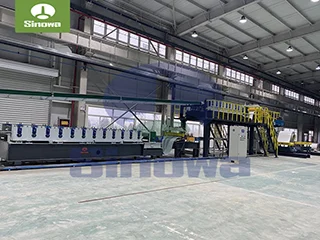
The fundamental design logic of a composite sandwich panel production line originates from the material composite mechanism of sandwich structures. The core structural advantage of composite sandwich panels lies in their layered structural design: the outer surface layers undertake external tensile and compressive stresses, while the inner core material bears shear force and achieves functional characteristics such as heat insulation and sound insulation. Reasonable material matching and structural combination enable the finished panels to achieve performance indicators that single homogeneous materials cannot reach. A complete production line takes this material composite principle as the core, realizing continuous and streamlined processing from raw material pretreatment to finished product output through the collaborative operation of multiple functional equipment units. Unlike discrete manual or semi-automatic processing equipment, modern composite sandwich panel production line adopts a linear assembly line layout, realizing uninterrupted material transmission, real-time parameter adjustment and synchronous coordination of each processing link, which fundamentally improves production efficiency and product consistency. The overall operational logic of the production line follows the sequential flow of raw material feeding, surface layer pretreatment, core material preparation, composite bonding, constant-temperature curing, fixed-length cutting, post-processing and finished product collection, and each link is closely interconnected with clear logical boundaries, forming a closed-loop production system that can achieve standardized mass production.
The complete mechanical structure of a composite sandwich panel line is composed of multiple independent and interconnected functional modules, each undertaking unique processing tasks and jointly completing the whole production process. The raw material unwinding module serves as the starting station of the entire production line, mainly used for placing coiled surface layer raw materials. This module is equipped with stable rotating shafts and tension control components, which can maintain constant feeding tension during the continuous unwinding process of coiled materials. Stable tension control effectively avoids material deformation, wrinkling and offset deviation in the transmission process, laying a foundation for the flatness of subsequent composite panels. Different types of surface layer raw materials, including metal sheets, fiber-reinforced composite sheets and polymer decorative sheets, can be adapted through simple structural adjustment of the unwinding module, reflecting the good compatibility of modern production lines for diversified raw materials. Auxiliary correction devices are installed inside the unwinding module, which can automatically identify the lateral offset of coiled materials and complete real-time position calibration, ensuring that the surface layer materials maintain a straight feeding track throughout the transmission process.
Following the unwinding module is the surface pretreatment module, which is a key link to ensure the bonding firmness between the surface layer and the core material. During the production and storage of raw coiled materials, impurities such as surface dust, oil stains and oxide layers are inevitably generated, and these contaminants will seriously reduce the bonding strength between materials if not removed. The pretreatment module integrates multiple processing units including dust removal, surface cleaning and material preheating. The dust removal unit adopts physical adsorption and air circulation purification structures to thoroughly remove floating particles and fine impurities on the material surface. The cleaning unit uses non-corrosive solvent coating and low-temperature drying technology to eliminate oil stains and adhesive attachments without damaging the surface structure of the raw materials. The preheating unit is equipped with evenly arranged heating components, which can raise the surface temperature of the sheet materials to the optimal bonding temperature within a set temperature range. Preheating treatment can effectively improve the activity of the material surface molecular structure, enhance the adhesion between the adhesive and the base material, and avoid degumming and delamination of composite panels in long-term use. The internal conveying rollers of the pretreatment module adopt anti-slip and wear-resistant structural design to ensure that the sheet materials remain flat and stable during low-speed transmission without secondary scratches.
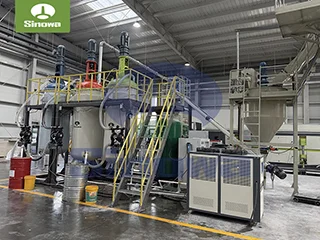
The glue coating and mixing module occupies a pivotal position in the composite sandwich panel machine, directly determining the bonding quality and structural stability of composite sandwich panels. This module is mainly composed of adhesive storage tanks, automatic metering systems, stirring and mixing structures and precise glue coating components. For composite panels requiring foam core materials, the module is also equipped with raw material blending equipment for foam substrates. The automatic metering system can accurately control the output ratio of different adhesives and raw material components, avoiding performance defects caused by unreasonable material proportioning. The stirring structure adopts a multi-layer spiral mixing design to realize uniform mixing of raw materials, eliminate internal bubbles and component stratification, and ensure the uniformity of adhesive viscosity and foam raw material composition. The glue coating unit uses precision roller coating technology, and the gap between coating rollers can be adjusted according to production requirements to control the glue coating thickness within a precise range. Uniform and moderate glue coating amount is crucial: insufficient glue will lead to insufficient bonding force, while excessive glue will cause glue overflow and material waste, and also increase the curing time of composite panels. In the production process of foam core sandwich panels, the mixed foam raw materials are evenly poured on the surface of the lower sheet material through quantitative feeding equipment, and the foam materials gradually expand and fill the intermediate gap in the subsequent transmission process.
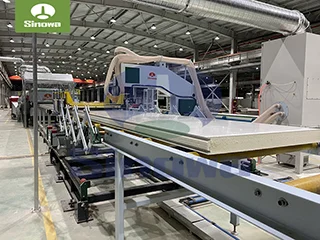
The composite lamination module is the core molding unit of the composite sandwich panel manufacturing line, responsible for completing the fitting and preliminary compounding of upper and lower surface layers and intermediate core materials. This module is internally provided with upper and lower parallel pressing structures, which can provide stable and uniform composite pressure for stacked materials. Different from simple mechanical pressing, the composite lamination module integrates temperature control and pressure adjustment systems, and can dynamically adjust pressure parameters according to the thickness, hardness and material characteristics of raw materials. In the closed composite space, the upper and lower sheet materials and the intermediate core materials are closely fitted under the action of mechanical pressure. For foam composite processes, the pressure value is strictly controlled to avoid excessive pressure from crushing the internal foam pore structure and damaging the thermal insulation and buffering performance of the core material. For solid core composite panels, appropriately increased pressure is adopted to eliminate tiny gaps between layers and enhance the overall compactness of the panels. The internal transmission speed of the lamination module keeps synchronous with the front-end feeding speed to ensure continuous production without material accumulation or disconnection. Meanwhile, the vacuum auxiliary structure inside the module can extract residual air between composite layers, effectively avoid bubble defects inside finished panels, and further improve the bonding compactness of layered structures.
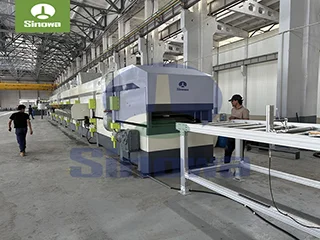
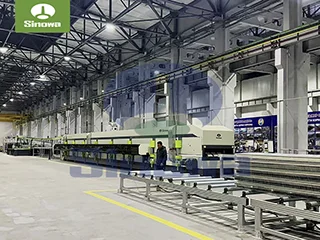
The constant-temperature curing and shaping module undertakes the tasks of adhesive curing, foam molding and structural shaping of initially composite panels. This module is a long closed heating passage, with multi-stage temperature control areas arranged in sequence inside, including low-temperature transition area, medium-temperature curing area and high-temperature shaping area. The temperature of each independent area can be independently adjusted to form a reasonable temperature gradient, which is conducive to the gradual completion of molecular cross-linking reactions of adhesives and full expansion and solidification of foam materials. The internal heating system adopts uniform heat conduction layout, which can keep the temperature difference of the internal space within a narrow range and avoid local overheating or low temperature leading to inconsistent curing degree of panels. During the slow transmission of composite panels in the curing passage, the adhesive gradually completes chemical curing reactions to form a stable bonding layer, and the foam core material completes expansion and pore shaping to form a uniform and dense internal structure. In order to prevent excessive temperature from causing thermal deformation of sheet materials, a circulating heat dissipation structure is arranged on the outer wall of the curing module to balance the internal and external temperature difference. The length of the curing passage is matched with the production line transmission speed to ensure that all composite panels can obtain sufficient curing time and reach the predetermined structural strength before leaving the curing area.
The cooling and traction module is arranged behind the curing module, mainly used to reduce the temperature of high-temperature cured panels and maintain stable transmission tension. After high-temperature curing, the surface and internal temperature of composite panels remain high, and direct cutting and processing will lead to thermal expansion and contraction deformation, affecting the dimensional accuracy of finished products. The cooling module adopts a combination of air cooling and water cooling structures: the surface adopts circulating cold air for uniform heat dissipation, and the bottom is equipped with circulating cooling water pipes for auxiliary heat conduction. The gradual cooling method is adopted in the cooling process to avoid structural cracks and internal stress caused by rapid temperature drop. The traction unit is equipped with high-precision synchronous rollers, which can provide stable traction power for panels. The traction speed is dynamically matched with the front-end production speed to ensure the overall synchronization of the production line. The tension sensing device inside the traction unit can monitor the tensile stress of panels in real time, automatically adjust the rotation speed of traction rollers, prevent panel stretching deformation, and maintain the flat and straight state of panels in the transmission process.
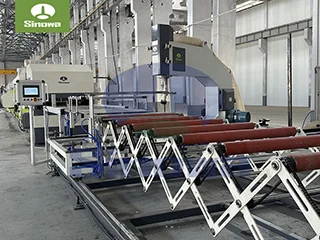
The fixed-length cutting and post-processing module realizes the dimensional customization and surface finishing of finished panels. According to the production parameters preset by the system, the high-precision cutting device in the module can complete fixed-length cutting of continuous long panels, and the cutting error is controlled within a tiny range to meet the dimensional requirements of different application scenarios. The cutting tool adopts high-hardness wear-resistant materials, which can keep the cutting edge smooth for a long time without burrs and cracks. For panels that need edge sealing, grooving and punching processes, the post-processing module is equipped with multi-functional processing components to complete edge trimming, groove opening and hole position processing in one continuous procedure. Edge sealing treatment can effectively prevent moisture from penetrating into the core material from the section, improve the moisture resistance and corrosion resistance of composite panels, and extend the service life of products. Grooving and punching processing is mainly to meet the assembly and connection requirements of panels in engineering installation, reserving installation positions for connecting parts and pipelines. All processing actions in this module are automatically controlled by the system, with high processing accuracy and strong consistency of finished product specifications.
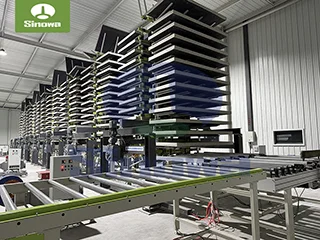
The final quality inspection and collection module is the last link of the composite sandwich panel machinery, undertaking the tasks of finished product detection, sorting and stacking. The inspection system integrates visual detection, dimensional measurement and performance sampling components. The visual detection device uses high-definition camera sensing technology to automatically identify surface defects such as scratches, depressions, color difference and residual glue on panels. The dimensional measuring instrument detects the thickness, length, width and flatness of panels one by one to screen out products with dimensional deviation. For the mechanical and physical properties of panels, the system adopts regular sampling detection to test bonding strength, compression resistance and thermal insulation performance, ensuring that the overall quality of batches meets production standards. Qualified finished products are automatically transported to the stacking area by the conveying device, and the stacking mechanism neatly arranges the panels in order to facilitate subsequent packaging, transportation and storage. Unqualified defective products are independently sorted and stored through the shunt structure to avoid mixing into qualified products. The whole inspection process realizes automatic non-contact detection, which not only improves detection efficiency, but also avoids secondary damage to panels caused by manual contact.
In terms of production process classification, composite sandwich panel production equipment can be divided into continuous production lines and intermittent production lines according to different operation modes, and the two types of production lines have their own applicable scenarios and process characteristics. Continuous production lines adopt uninterrupted linear transmission structure, and raw materials are fed, compounded, cured and cut in a continuous state. This type of production line has high operational efficiency, stable production rhythm and large single-day output, and is suitable for mass standardized production of conventional specification composite panels. The internal parameter coordination of continuous production lines is highly precise, and all equipment units maintain synchronous operation, with low manual intervention and strong production automation. Intermittent production lines adopt batch processing mode, with independent molding and curing units. After one batch of materials completes the composite curing process, the next batch of raw materials is fed. Although the production efficiency of intermittent production lines is relatively low, they have stronger production flexibility, can adapt to the production of composite panels with special specifications, complex shapes and diversified materials, and are more suitable for small-batch and multi-variable customized production orders.
According to different core material types, the production processes of composite sandwich panels also have obvious differences. Foam core composite panels are the most widely used type in the market, and their production process relies on continuous foam pouring and in-situ foaming molding technology. In the production process, polymer foam raw materials are fully mixed through a metering stirring system, evenly poured on the lower surface sheet, and gradually expanded and foamed in the closed composite space. With the cooperation of temperature and pressure conditions, the foam materials form a uniform porous structure and are tightly bonded with the upper and lower sheets. This process has low production cost and light product weight, and is widely used in building enclosure structures and thermal insulation facilities. For solid core composite panels such as rock wool and glass wool, the production line adopts prefabricated core material laying process. The cut solid core materials are evenly arranged between the upper and lower sheets, and the gaps between core materials are filled with adhesives. After high-pressure lamination and constant-temperature curing, integrated composite structures are formed. Such panels have excellent fire resistance and sound insulation performance, and are mostly used in high-standard clean rooms and fire-proof building projects.
The automated control system is the intelligent core of modern composite sandwich panel production machine, realizing centralized management and precise regulation of all production links. The control system adopts a modular programming structure, and operators can set production parameters such as material feeding speed, glue coating amount, curing temperature, composite pressure and cutting size through the human-computer interaction interface. The system is equipped with a real-time data acquisition function, which can collect operating data of temperature, pressure, speed and material thickness in the production process, and form visualized data curves for production personnel to view and analyze. When abnormal parameters such as excessive temperature, material blockage and feeding deviation occur in the production process, the intelligent control system can automatically trigger early warning signals and execute emergency protection actions such as equipment deceleration and shutdown to avoid equipment failure and mass defective products. In addition, the system has a parameter storage function, which can save the production parameters of conventional products. When producing the same type of panels again, it can directly call the preset parameters to shorten the parameter debugging time and improve production convenience. The independent control units of each module maintain data interconnection, realizing collaborative linkage between front and rear equipment and ensuring the overall stability of the production line.
In the actual production and operation process, standardized equipment maintenance and scientific production management are important guarantees to prolong the service life of the composite sandwich panel manufacturing machine and stabilize product quality. Daily maintenance work mainly includes surface cleaning, lubrication maintenance and component inspection of equipment. After daily production, the residual adhesive, foam residues and dust on the surface of conveying rollers, coating structures and cutting devices need to be thoroughly cleaned to prevent material residues from corroding equipment components and affecting subsequent production accuracy. The transmission bearings and rotating shafts of the production line are regularly coated with high-performance lubricants to reduce mechanical friction loss and avoid abnormal noise and jamming during equipment operation. The wearing parts such as cutting tools and sealing gaskets are inspected regularly, and severely worn parts are replaced in a timely manner to maintain the processing accuracy of the equipment. Regular deep maintenance includes the calibration of detection sensors, the debugging of temperature and pressure control systems, and the inspection of line circuits. Professional technicians conduct regular overall debugging of the production line to eliminate potential equipment faults and keep the equipment in the optimal operating state.
Production management covers raw material management, personnel management and production environment management. Raw material management needs to classify and store sheet materials, adhesives and core materials, control the storage temperature and humidity to prevent raw materials from deterioration, deformation and performance attenuation. Before feeding, raw material quality inspection is carried out to eliminate unqualified raw materials and avoid production risks from the source. Personnel management formulates standardized operation procedures, and all operators need to master equipment operation specifications and safety operation guidelines to avoid safety accidents caused by irregular operation. The production environment maintains a clean, dry and well-ventilated space, controls the environmental dust concentration and temperature, reduces the impact of external environmental factors on the composite curing effect of panels, and creates a stable production working condition. Reasonable production scheduling arranges production batches according to product specifications, reduces the number of equipment parameter adjustments, and improves the continuous production efficiency of the production line.
Composite sandwich panels produced by professional production lines have comprehensive performance advantages, making them widely used in multiple industrial fields. In the construction industry, such panels are used as building wall panels, roof panels and partition panels, relying on their lightweight and high-strength characteristics to reduce building self-weight, shorten construction cycle and reduce construction costs. The excellent thermal insulation performance can effectively reduce building energy consumption, meeting the energy-saving and emission-reduction requirements of modern buildings. In the transportation manufacturing industry, composite sandwich panels are applied to the carriage plates of refrigerated transport vehicles, passenger car compartment partitions and ship interior decorative plates. The panels have good shock resistance, corrosion resistance and temperature resistance, which can adapt to complex transportation environments and prolong the service life of transportation equipment. In the field of industrial purification, high-density composite panels are used for the enclosure structures of clean workshops, with smooth surface, easy cleaning and antibacterial properties, meeting the high-purity environmental requirements of pharmaceutical processing and electronic production workshops.
In addition, composite sandwich panels also play an important role in special fields such as cold storage engineering, chemical anti-corrosion facilities and temporary engineering buildings. The low-temperature resistance and moisture-proof performance of the panels can maintain stable structural performance in low-temperature cold storage environments and reduce cold air loss. The surface anti-corrosion treatment process enables the panels to resist the erosion of chemical corrosive substances, which is suitable for the internal laying of chemical production workshops. The convenient assembly and disassembly characteristics make the panels widely used in temporary construction buildings and emergency rescue facilities, with strong engineering applicability. With the continuous upgrading of industrial production standards, the application scope of composite sandwich panels is still expanding, putting forward higher requirements for the production capacity and processing accuracy of supporting production lines.
From the perspective of industrial development trends, composite sandwich panel making machine is evolving towards intelligent upgrading, energy conservation and environmental protection, and diversified compatibility. In terms of intelligent upgrading, the production line will be equipped with more high-precision sensing elements and artificial intelligence analysis systems to realize automatic identification of raw material defects, intelligent adjustment of production parameters and autonomous judgment of product quality. The introduction of digital twin technology can simulate the production operation state of the production line, predict equipment failure risks, and realize predictive maintenance of equipment. In terms of energy conservation and environmental protection, the production line optimizes the internal heating and heat dissipation structure, adopts high-efficiency energy-saving heating components and circulating heat utilization systems to reduce energy consumption in the production process. At the same time, it is equipped with waste gas and residue recovery devices to recycle excess adhesives and foam residues, reduce production waste discharge, and meet the global industrial environmental protection development requirements.
In terms of diversified compatibility, the improved continuous sandwich panel line can adapt to more types of new composite materials, including high-performance fiber composite materials, modified polymer materials and environmentally friendly degradable core materials. The adjustable structural design enables the production line to process ultra-thin, ultra-thick and special-shaped composite panels, meeting the personalized production needs of emerging industries. In addition, the production line is developing towards compact and integrated structure, optimizing the layout of internal equipment modules, reducing the floor area of production equipment, and lowering the site construction cost of production enterprises. With the continuous progress of material science and mechanical manufacturing technology, the production efficiency, processing accuracy and intelligent level of composite sandwich panel production lines will be further improved, providing more high-quality composite panel products for downstream industries.
In conclusion, the composite sandwich panel production line is a comprehensive industrial production system integrating mechanical transmission, chemical processing, intelligent control and precision manufacturing. It completes the efficient production of high-performance composite sandwich panels through orderly coordinated operation of multiple functional modules. From raw material pretreatment to finished product delivery, every production link has rigorous technological logic and mechanical design principles. The standardized production mode of the production line ensures the stable quality of composite panels, and the automated production structure reduces manual production costs. With the continuous expansion of the application market of composite sandwich panels and the continuous innovation of industrial manufacturing technology, composite sandwich panel line will constantly break through technical bottlenecks, realize iterative upgrading in intelligence, energy conservation and compatibility, and provide strong technical support for the high-quality development of the composite material industry. In the future industrial system, such efficient and environmentally friendly composite production equipment will become an important part of the green manufacturing industry, promoting the sustainable development of the global building materials and industrial composite material fields.
https://www.cnsinowa.com/sandwich-panel-machines/composite-sandwich-panel-production-line.html